Sludge dewatering that takes the water out on site
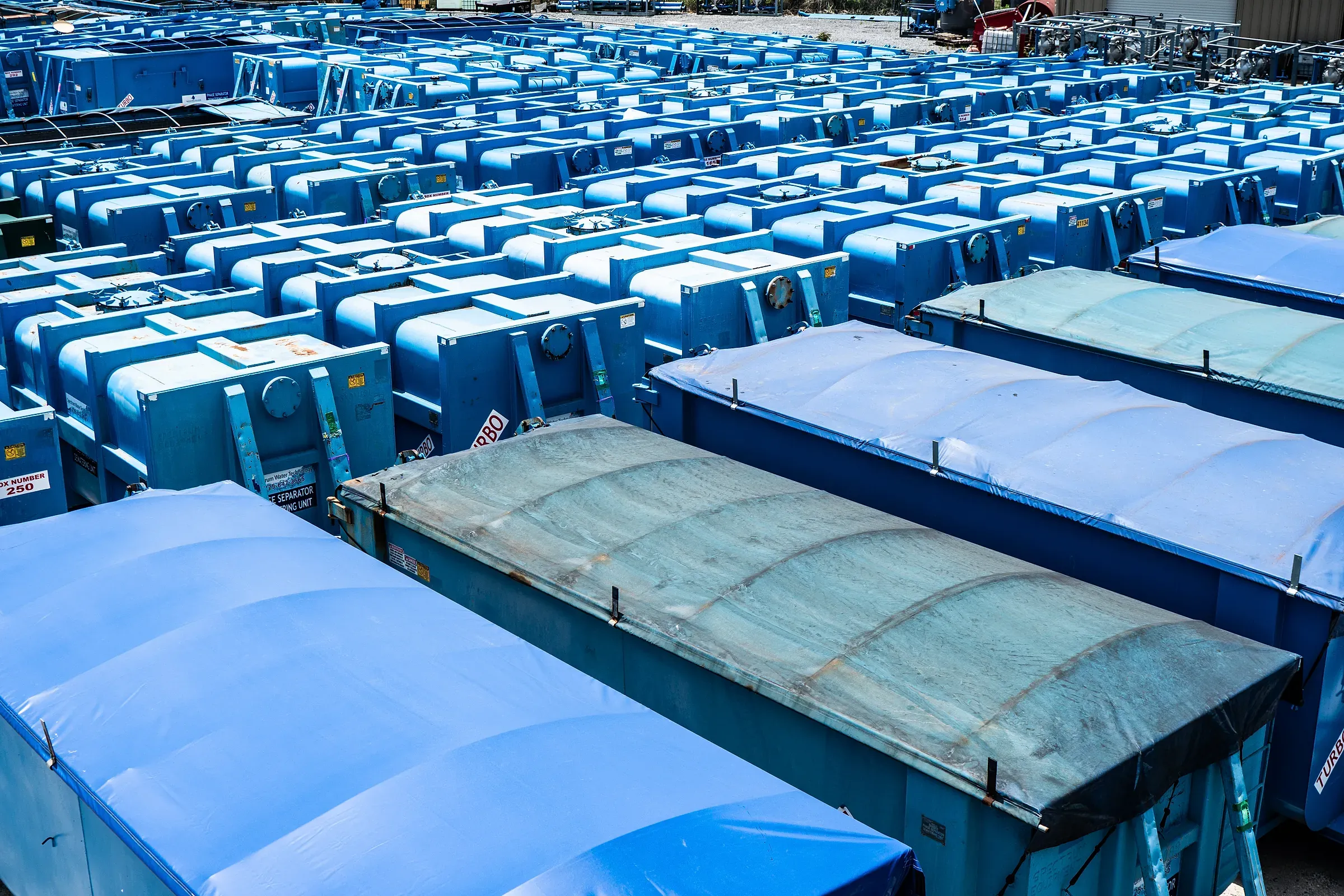
Disposal is billed by weight, and most of that weight is water. Spectrum runs the largest Turbo Phase Separator fleet in the U.S. alongside belt presses, centrifuges and geotextile tubes — with the polymer chemistry worked out in our own lab before the first load.
The right method depends on volume, cake target and whether the stream runs daily or once a year.
Turbo Phase Separators
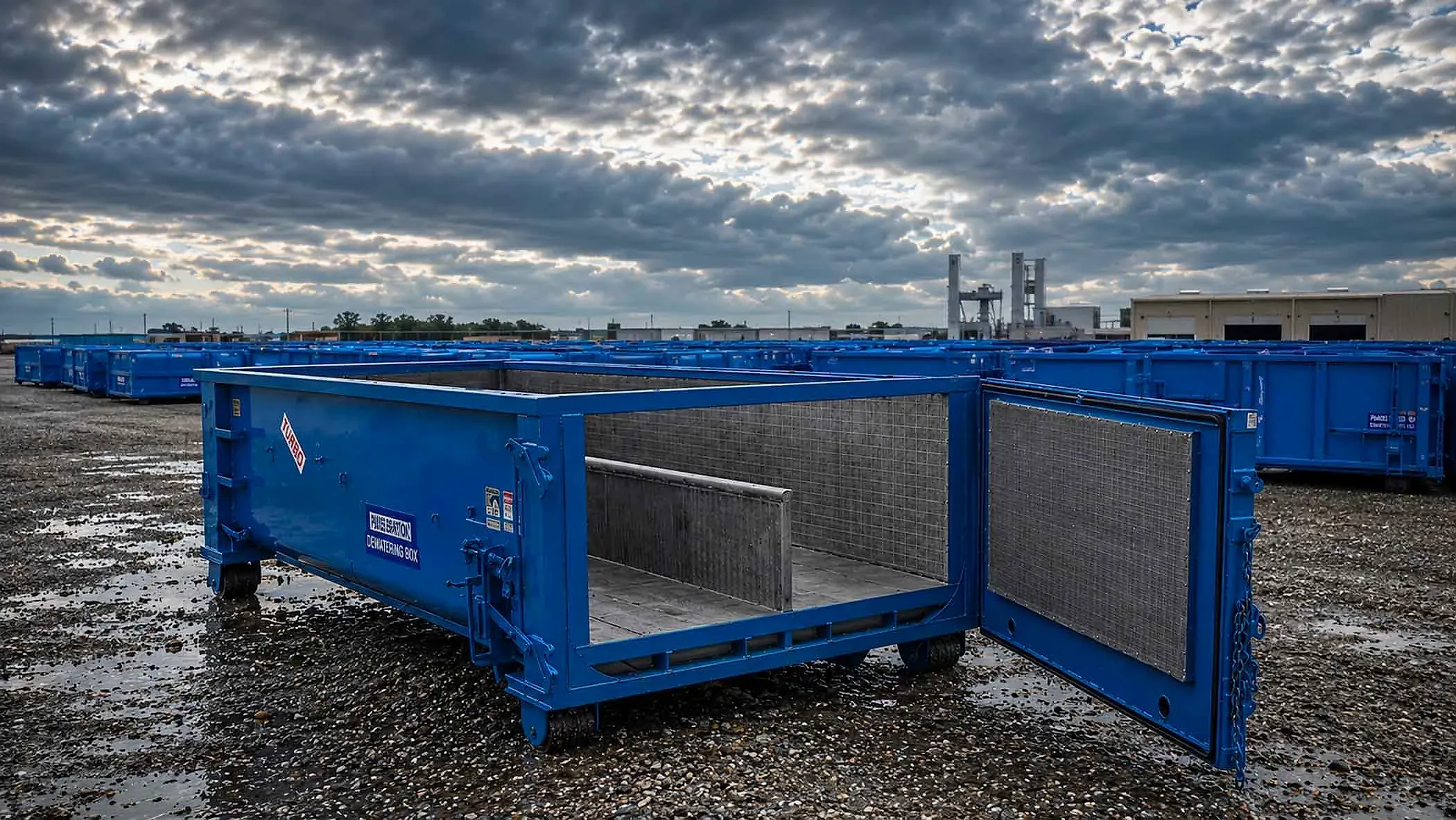
Patented roll-off containers with an internal stainless-steel screen, giving 33% more drainage area and a 60% shorter water flow path than a standard box.
Why it matters
More water leaves on site instead of on a truck, so each load carries solids rather than freight you already paid to treat.
Continuous mechanical dewatering for steady-state sludge production, with polymer conditioning tuned on site.
Why it matters
Suits a plant producing sludge every day, where a box would need constant swapping.
Centrifuges
High-G separation for streams where cake dryness matters more than throughput cost.
Why it matters
Pushes cake solids past what gravity drainage alone will reach.
Geotextile tubes
Large-volume passive dewatering for lagoon cleanouts and dredge spoil, filled with polymer-conditioned slurry.
Why it matters
Handles very large volumes without a mechanical footprint or an operator on shift.
Fixed filter hoppers
Compact 1–5 cu. yd. units for smaller sludge, slurry and wet-solids applications.
Why it matters
Right-sizes the job where a 20-yard box would sit half empty.
End dump & fast flow trailers
Open-top trailers with recessed drainage screens that continue dewatering in transit.
Why it matters
Paired with Turbo Phase Separators, water keeps leaving the load all the way to the gate.
Difficult solids
Where a standard box runs out of road
A standard dewatering box is a practical choice for straightforward gravity applications. Performance depends heavily on solids type, loading rate, filter media and drainage path — and it can need considerably more time on fine solids, heavy sludge, debris or material that is hard to pump.
The Turbo Phase Separator was built for exactly those streams: more internal screen area, a shorter path for water to travel, and a design that tolerates lumps, chunks and trash rather than blinding on them.
The polymer is chosen on your sludge, not a spec sheet
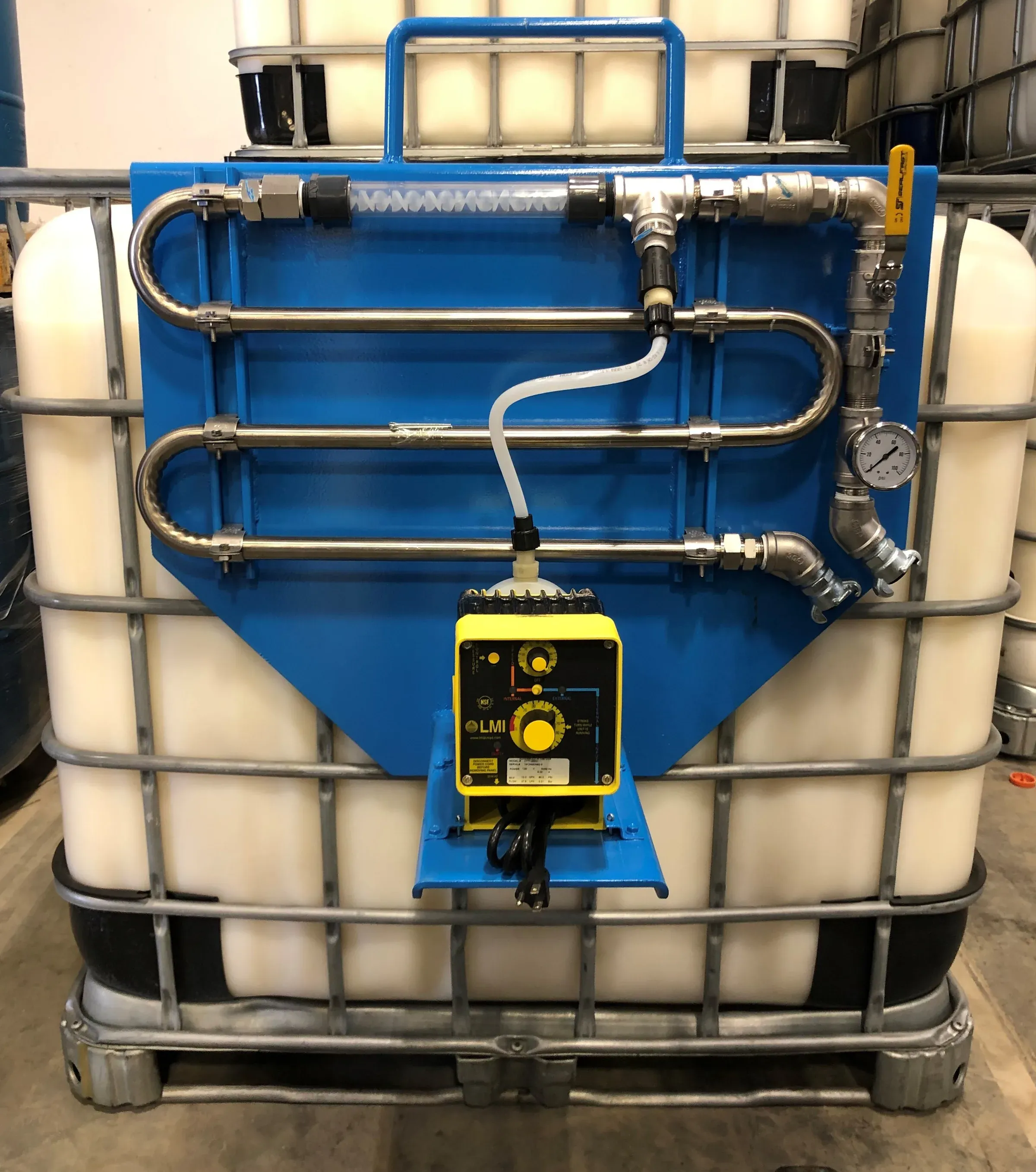
Dewatering performance lives or dies on conditioning. Spectrum's in-house laboratory runs jar tests and treatability studies on your actual sample to select the flocculant or coagulant and the dose, and automated polymer blending skids then deliver consistent, properly hydrated solution to the box or press. The chemists who ran the bench work are reachable when the field data shifts.
FAQs
How much can dewatering actually reduce disposal cost?
Think in dry tons per haul rather than haul weight. Turbo Phase Separators paired with fast-flow end dump trailers keep draining all the way to the gate, so a load leaves with roughly twice the dry solids of typical dewatering. Because disposal is billed by weight and most of that weight is water, taking water out on site is the single biggest lever on the invoice — and every load you do not send is a truck that never runs.
What if the sludge has debris in it?
That is where a standard box struggles and the Turbo Phase Separator design is built to help. It is designed to handle material that cannot easily be pumped because of lumps, chunks, trash or debris, which is common in lagoon cleanouts and tank bottoms.
Do I need polymer, and who works that out?
Usually yes, and Spectrum works it out. The in-house laboratory runs jar tests on your actual sludge to select the flocculant or coagulant and the dose, then the field crew confirms it during start-up. Polymer blending skids arrive factory wet-tested and sized to the target solids load.
Can odor or volatiles be contained?
Yes. Vacuum-loadable Turbo Phase Separator options can be completely enclosed where odor or volatile containment matters, which open box configurations cannot do.
Is this a rental, a service, or both?
Either. You can rent boxes and run them yourself, or Spectrum can run the whole dewatering operation as a service — crews, polymer, boxes and haul-off — under a single contract.