Hydraulic dredging
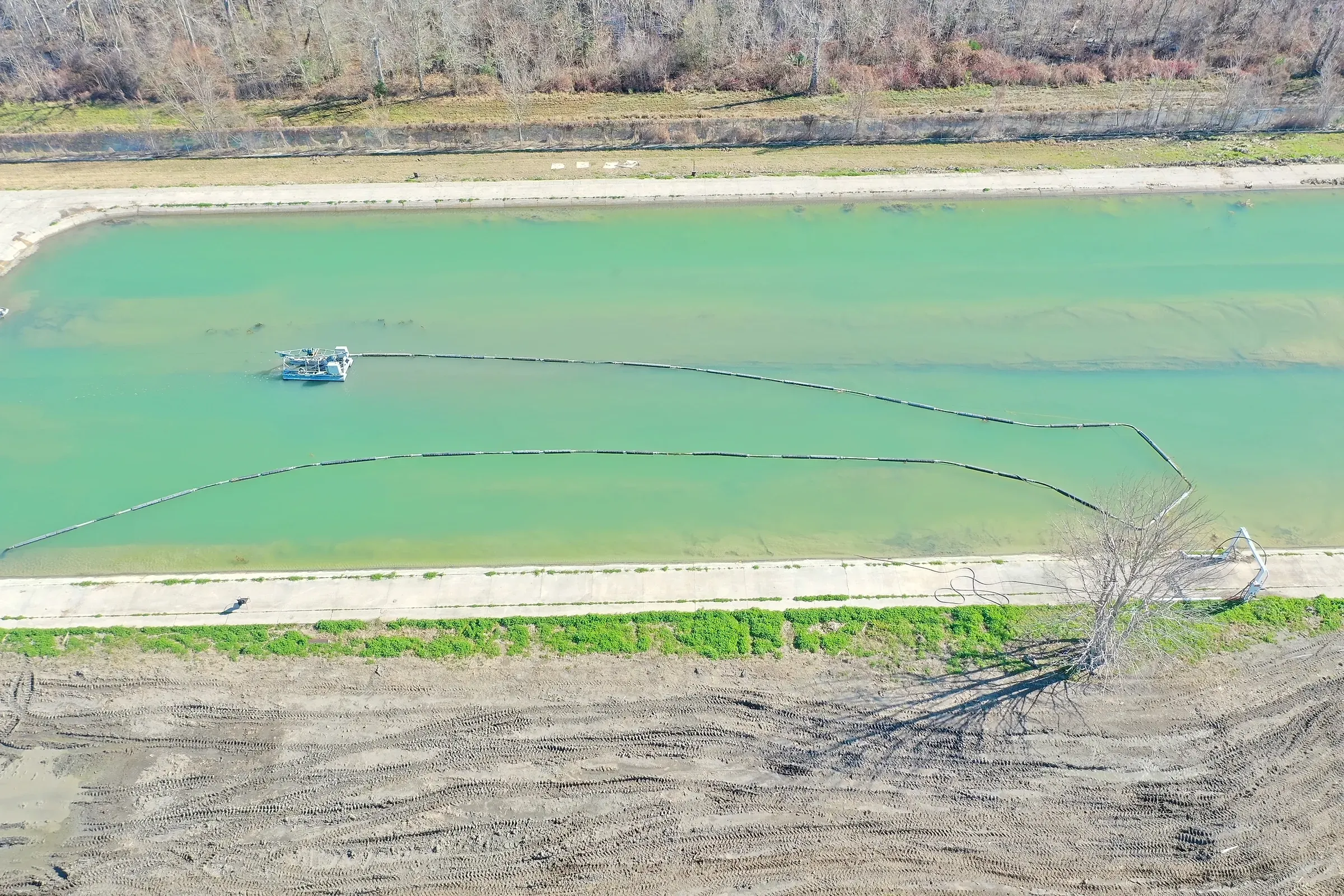
Cutter-suction and pontoon-mounted dredges pump sediment as a slurry without draining the waterbody.
Why it matters
The pond stays in service, which matters when it is part of an active treatment train.
Water Solutions
Hydraulic and mechanical removal of sediments from ponds, lagoons, basins and waterways — revitalizing waterbodies, restoring storage and preparing sites for expansion, with safety and stewardship at every step.
Capability
Dredges, separation, dewatering, matting and disposal — staged together rather than subcontracted apart.
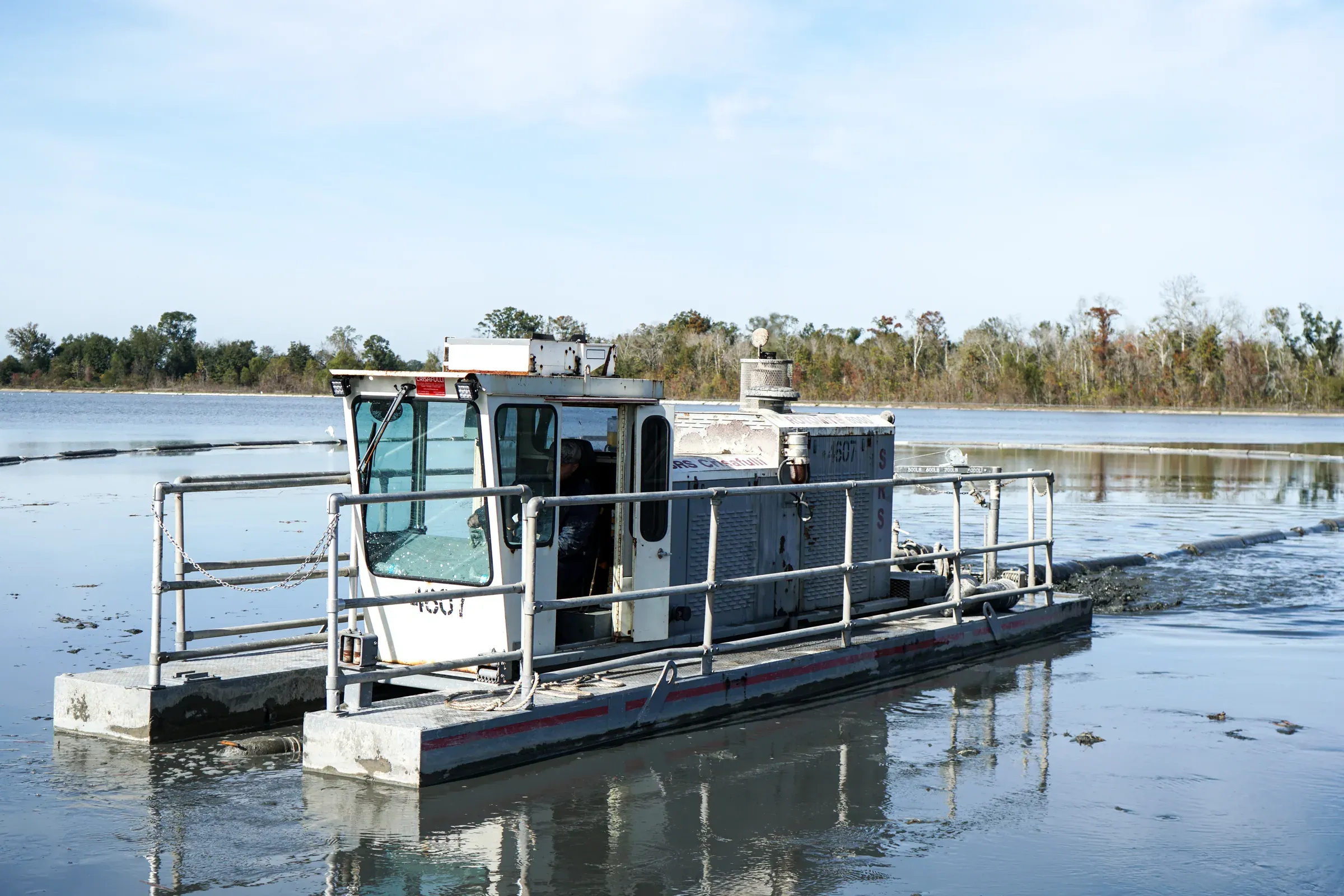
Cutter-suction and pontoon-mounted dredges pump sediment as a slurry without draining the waterbody.
Why it matters
The pond stays in service, which matters when it is part of an active treatment train.
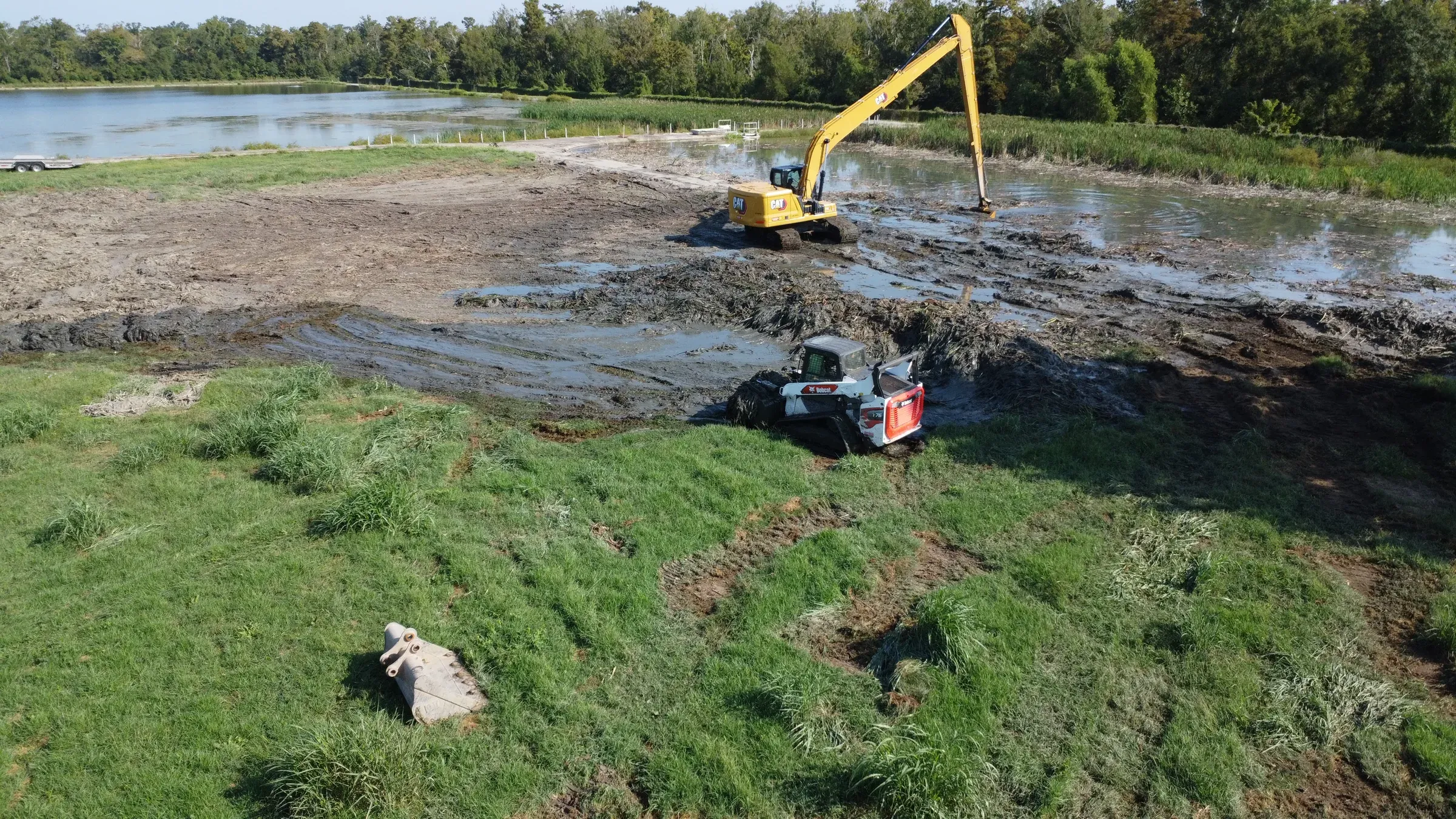
Long-reach excavators and tracked loaders working from the bank or a mud berm on partially drained cells.
Why it matters
Handles heavy, consolidated or debris-laden material that a pump cannot lift.
Custom rake and grapple buckets clear cut vegetation and floating mats before sediment work begins.
Why it matters
Stops fibrous material blinding the dewatering equipment downstream.
Skid- or trailer-mounted pumps, screens and hydrocyclones fed straight from the dredge.
Why it matters
Grit and trash come out before the slurry reaches the boxes, which protects cake quality.
Turbo Phase Separators, geotextile tubes and fast-flow trailers take the water out before anything leaves site.
Why it matters
Roughly 2X the dry tons per haul, which is where most of the project budget actually sits.
Heavy-duty composite or hardwood mats rated for cranes and dredge traffic.
Why it matters
Protects wetlands and liner-covered cells from the equipment that came to fix them.
Hydraulic dredging
Cutter-suction and pontoon-mounted dredges lift accumulated solids as a slurry and pump them to the bank, so a settling lagoon or polishing pond can stay in service through the work. Discharge lines run to a screening and dewatering train staged on the bank, which means the water goes back where it came from and only solids leave the site.
How a project runs
Five stages, in the order they actually happen.
Bathymetry establishes how much material is in the cell and where it sits; sampling establishes what it is and how it will need to be handled and disposed of.
Volume, access, consolidation and whether the waterbody can be taken out of service decide between hydraulic and mechanical removal — often both, in sequence.
Mats go down, the dewatering pad is set up, and the separation train is staged and connected before any sediment moves.
Sediment is removed and routed straight into screening and dewatering, with polymer conditioning tuned against the material actually coming out.
Dewatered solids are profiled, hauled and manifested — or, where the material qualifies, routed into the beneficial reuse program instead of a landfill.
ResultOne contractor accountable from bathymetry through final manifest.
Mechanical dredging
Long-reach excavators and tracked loaders work consolidated sediment, cut vegetation and debris-heavy cells that defeat hydraulic removal. Custom rake and grapple buckets clear fibrous material first, so the dewatering equipment downstream sees sediment rather than a mat of vegetation.
Not for hydraulic dredging — a pontoon-mounted cutter dredge works on a full cell and pumps sediment out as a slurry, so the waterbody stays in service. Mechanical removal with long-reach excavators needs the cell partially drained, and is the better answer for heavily consolidated or debris-laden material.
It goes straight into screening and dewatering on the bank. Turbo Phase Separators, geotextile tubes and fast-flow trailers take the water out before anything is hauled, which is what keeps disposal cost down. Spectrum then profiles, transports and documents the material — or routes it into beneficial reuse where it qualifies.
One. Dredging, dewatering, disposal and documentation all sit inside Spectrum, which is unusual on this kind of project — most sites end up coordinating a dredging contractor, an equipment yard, a hauler and a lab separately.
Composite or hardwood mats rated for crane and dredge traffic go down before equipment moves, specifically to protect wetlands and liner-covered cells. Safety and stewardship are part of the scope rather than a line item added afterwards.
Four buckets, one call
Water, Environmental, Carbon, and Equipment run as one team under one contract — so you brief a single crew and get an answer, not a referral.