Bathymetric Contour Map
A GPS-referenced map of the cell showing water depth, sludge depth and the position of the hard bottom or liner across the full footprint.
Why it matters
Shows where the material is, which is what determines how it comes out.
Water Solutions
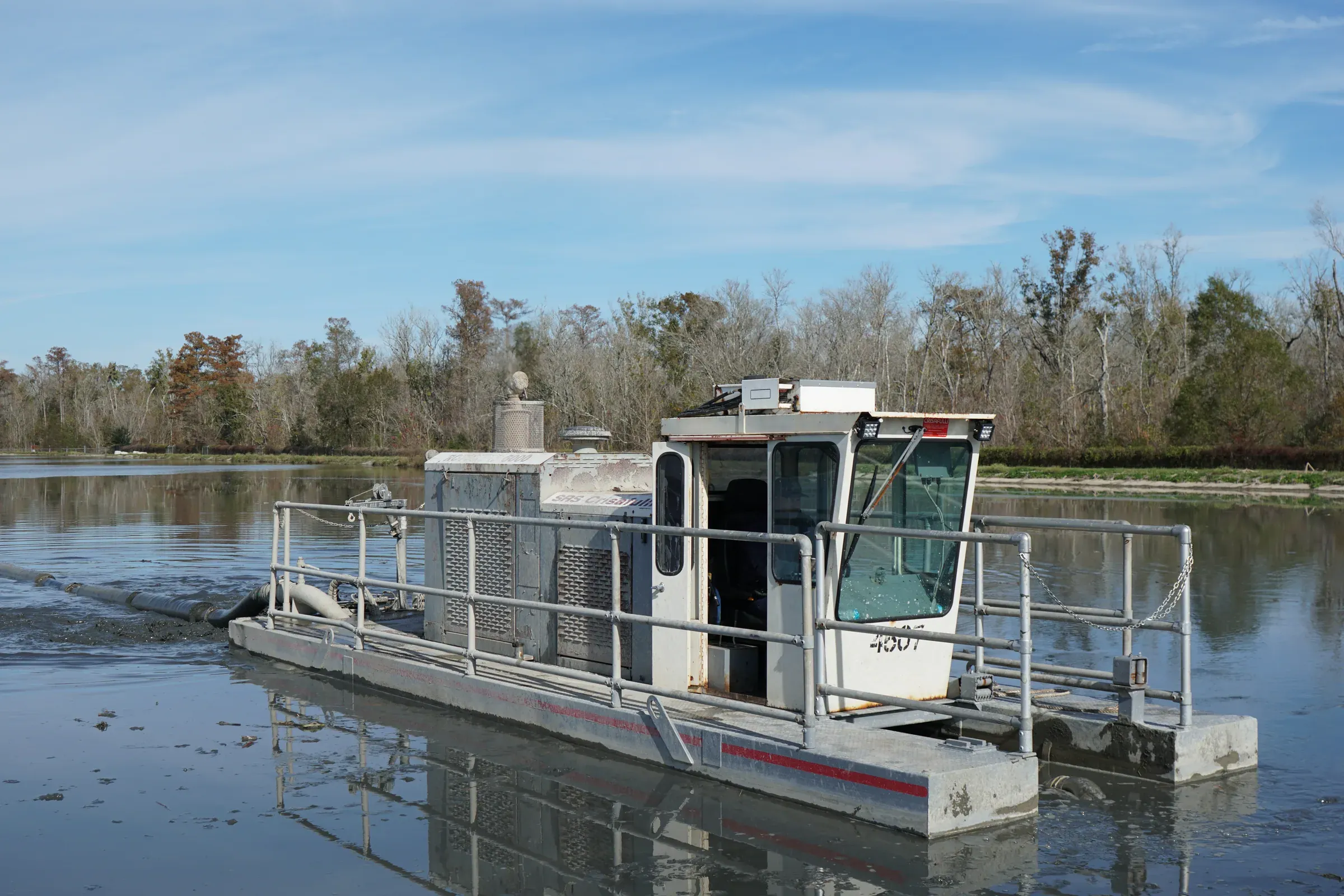
A bathymetric sludge survey puts a boat on the water and comes back with a contour map of the bottom, a real volume in dry tons, and a scope of work you can put out for bid. No draw-down, no taking the cell out of service.
How a survey runs
Order matters here: you cannot characterize material you have not located, and you cannot scope a cleanout without a volume.
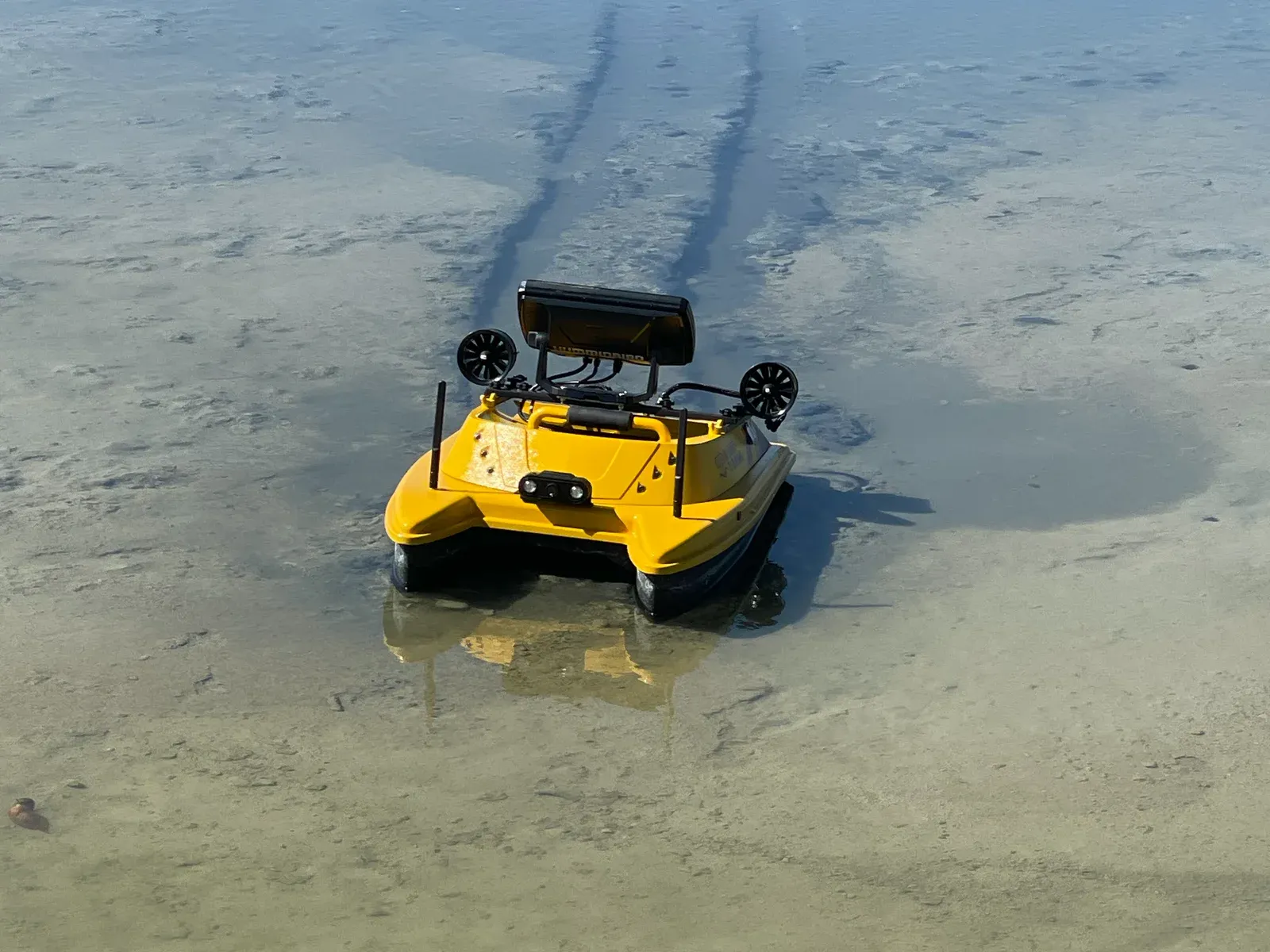
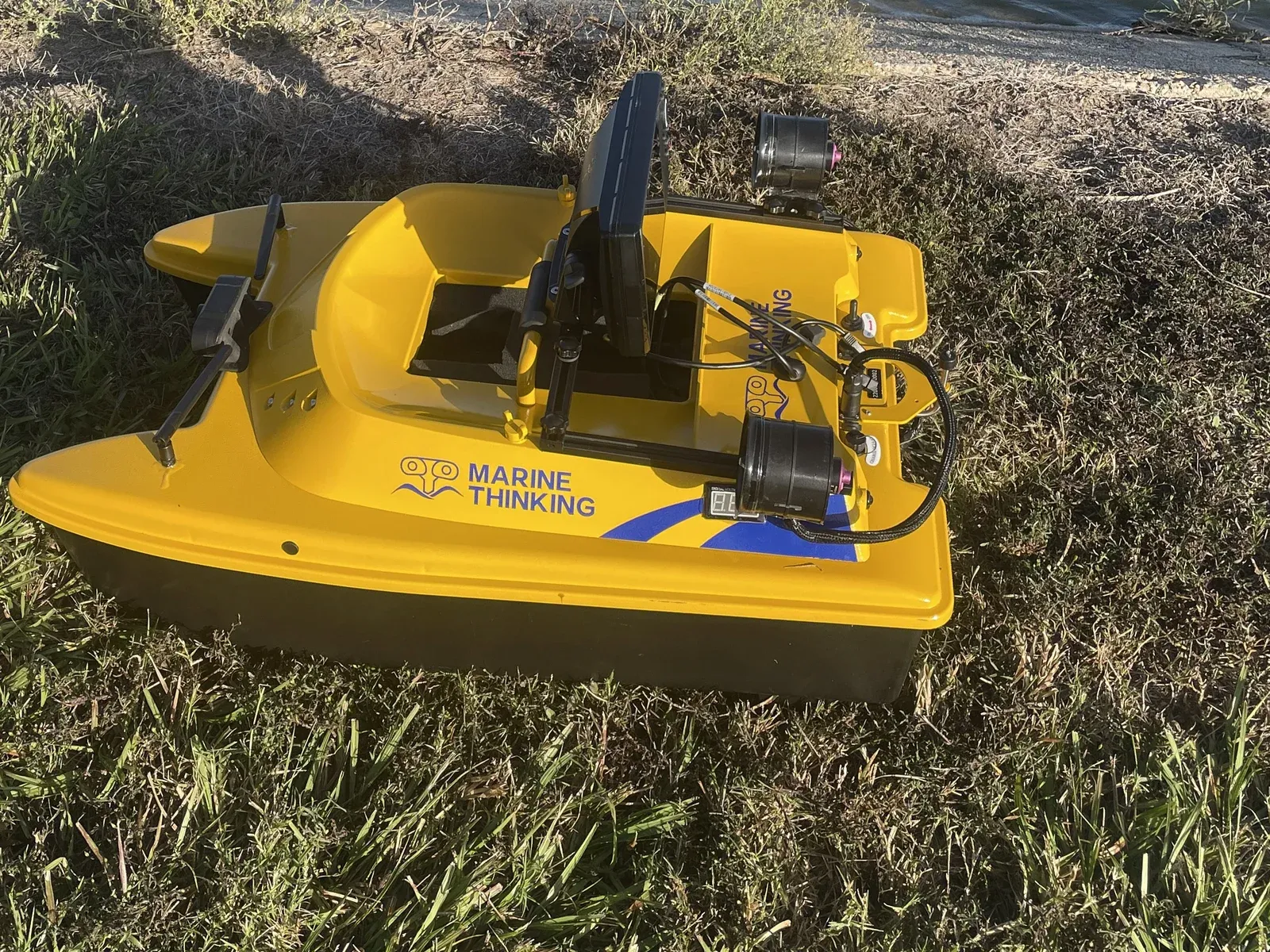
A shallow-draft survey boat launches from the bank — no dewatering, no draw-down, no taking the pond out of service. Most cells are covered in a single day.
ResultThe pond keeps operating throughout.
Dual-frequency sonar runs a gridded pattern across the cell, logging water depth and sludge depth against GPS position at every point along the line.
ResultA dense point cloud rather than a handful of pole soundings.
The survey data is worked up into a bathymetric contour map of the cell showing sludge thickness across the whole footprint, the position of the liner or hard bottom, and where the accumulation actually sits.
ResultYou can see the problem instead of estimating it.
Core samples go to the Spectrum laboratory for solids content, settling behavior, dewaterability and any waste characterization the disposal route will require.
ResultDetermines whether it dewaters, and where it can go.
Volume, material behavior and disposal route resolve into a real scope of work: how much comes out, how it gets dewatered, what it costs to haul and where it lands.
ResultA document you can bid, budget or build a capital request around.
What you get
Everything procurement, engineering and the plant manager each need out of the same day on the water.
A GPS-referenced map of the cell showing water depth, sludge depth and the position of the hard bottom or liner across the full footprint.
Why it matters
Shows where the material is, which is what determines how it comes out.
Accumulated solids quantified in cubic yards and in dry tons, along with remaining freeboard and lost storage capacity.
Why it matters
Every number in a dredging quote is derived from this one. Get it wrong and the change orders follow.
Laboratory results on solids content, settling and dewaterability, plus waste characterization where the disposal route calls for it.
Why it matters
Decides whether the material dewaters on site or gets hauled wet — the single largest cost in the project.
Current capacity against design capacity, and accumulation rate where a prior survey exists to compare against.
Why it matters
Turns "the pond looks full" into a maintenance interval you can plan and budget for.
The removal method that suits the material and the site — hydraulic dredging, mechanical excavation or a combination — with the dewatering train sized to match.
Why it matters
The method has to suit the material. Choosing it from a volume alone is how projects go over.
A written scope covering removal, dewatering, transport, disposal and site restoration, structured so it can go straight out for competitive bid.
Why it matters
Most plants know the pond needs cleaning and have nothing they can put in front of procurement.
Why it pays for itself
Dredging is priced on volume and disposal is billed by weight, so the two numbers that set the cost of the whole project are settled before a dredge ever arrives. A pond scoped from a guess gets bid from a guess, and the correction shows up as a change order once the work is under way.
A survey replaces both guesses with measurements, and the laboratory work answers the expensive question early: whether the material dewaters on site or gets hauled wet. Run through Turbo Phase Separators and fast-flow trailers, the same tonnage leaves in roughly half the loads — but you need to know what the material is before you can commit to that.
And then the work
Spectrum surveys ponds because Spectrum cleans them out. The hydraulic and mechanical dredging fleet, the dewatering train and the disposal route all sit in the same company, which is why the recommended approach comes with real numbers behind it rather than a method chosen off a list. If you take the scope out to bid and someone else wins it, the survey still did its job — you found out what was in the pond.
Dredging servicesA survey boat runs sonar transects across the cell, logging water depth and sludge depth against GPS position. Worked up, that becomes a contour map of the bottom and a real volume of accumulated solids — how much is in there, how thick it is and where it sits. Core samples then establish what the material actually is.
No. The survey runs off a shallow-draft boat on the surface, so the cell keeps operating and there is no draw-down or dewatering to arrange. Most ponds and lagoons are covered in a single day.
Because without a volume, every bid you receive is a guess, and the change orders arrive once the dredge is on site. A survey gives all bidders the same numbers to price against, which is what makes the quotes comparable — and it means you find out what the material is before you have committed to a disposal route.
Yes, and that is most of the value. Spectrum turns the survey into a scope covering removal, dewatering, transport and disposal, written so it can go out for competitive bid. We do the dredging too, so the scope comes from people who have to execute against this kind of document rather than only write them.
The survey is a paid engagement — there is a boat, a crew and laboratory work behind it. It is priced as its own scope and it stands on its own: the map, the volume and the recommended approach are yours whether or not Spectrum does the cleanout.
Ponds in active industrial service are usually worth surveying every three to five years, and sooner where the influent has changed or freeboard is getting short. A second survey against a first also gives you an accumulation rate, which is what turns cleanout from an emergency into a planned interval.
Customers served
Refineries, chemical plants, terminals and mills bring Spectrum their ponds and lagoons — most of them on recurring site contracts rather than one-off jobs.




















Four buckets, one call
Water, Environmental, Carbon, and Equipment run as one team under one contract — so you brief a single crew and get an answer, not a referral.