Structural steel & skids
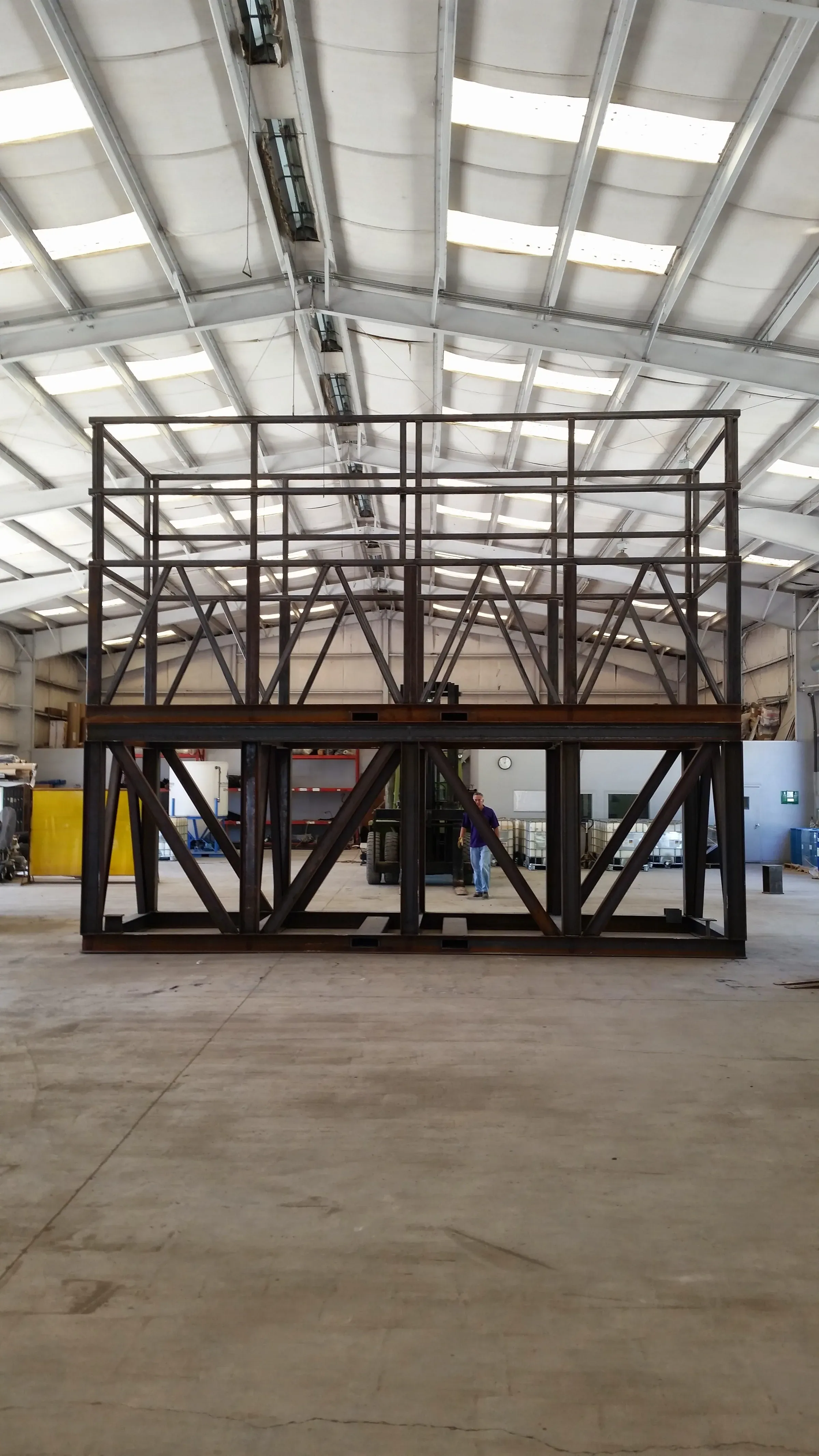
Cross-braced skid frames and multi-level platforms fabricated from raw stock in our own bays.
Why it matters
The base everything else is built on, engineered rather than adapted.
Expertise
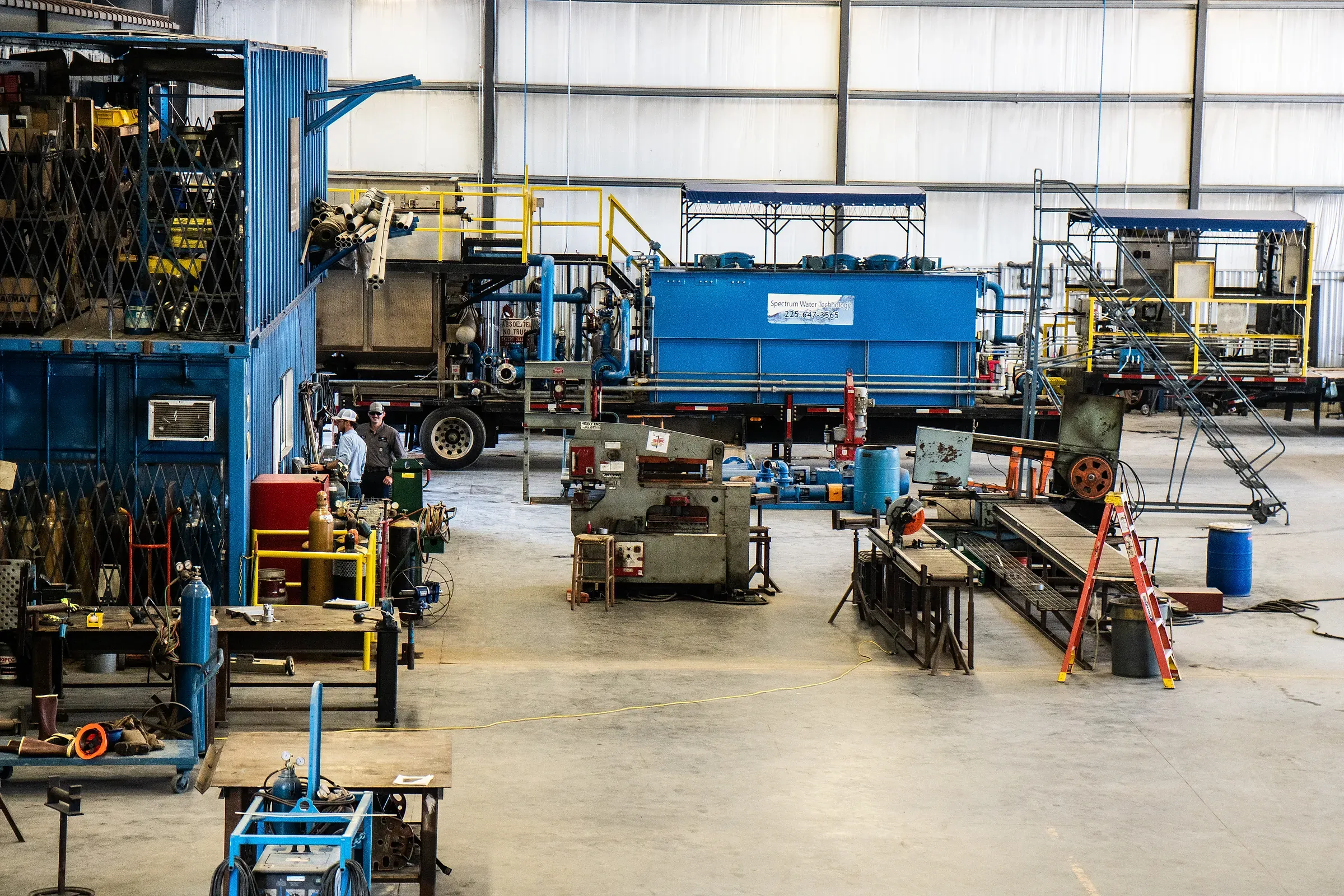
Spectrum designs and builds its own treatment equipment — DAF units, clarifiers, dewatering boxes, polymer skids and custom vessels — modeled in SolidWorks before steel is cut and wet-tested before it ships. Which is why build-to-spec here is a normal Tuesday rather than a special request.
Capability
Steel, vessels, trailers, controls, chemical feed and finishing — all in the same building.
Cross-braced skid frames and multi-level platforms fabricated from raw stock in our own bays.
Why it matters
The base everything else is built on, engineered rather than adapted.
Cone-bottom hoppers, separator vessels, clarifier bodies and filter boxes in steel or FRP.
Why it matters
Custom geometry for footprints and chemistries no catalog unit covers.
Complete treatment trains built onto heavy-haul chassis, with access stairs, handrails and controls.
Why it matters
Treatment that arrives on wheels instead of as a construction project.
Stainless control panels, explosion-proof stations, rigid conduit and installed instrumentation.
Why it matters
The unit arrives commissioned-ready rather than as a mechanical shell.
Metering pump panels, injection loops, polymer blending skids and delivery cabinets.
Why it matters
Chemistry and hardware specified by the same building.
Surface preparation, priming and finish coating before anything leaves the yard.
Why it matters
Corrosion protection appropriate to the stream, applied under controlled conditions.
How a build runs
Five stages, and the modeling stage is the one that protects the schedule.
Flow, contaminant, permit limit, footprint and access. Where the chemistry is unsettled, the in-house lab runs bench work first.
Each unit is modeled in SolidWorks to confirm payload, axle loading and drainage performance before steel is cut.
ResultProblems found on a screen instead of in a fabrication bay.
Cutting, fitting, welding and assembly in our own bays, by our own crews.
Units are wet-tested with media and hoses installed, and instrumentation verified, before they ship.
ResultArrives ready to run rather than ready to troubleshoot.
Spectrum technicians and process chemists set feed rates and tune the unit against real influent, and stay until the data holds.
Engineering first
Every dewatering box is modeled in SolidWorks to confirm payload, axle loading and drainage performance before fabrication starts. A box that is over on axle loading or short on drainage area is an expensive thing to discover after it is welded.
The same discipline applies to skids and vessels: structure, access and serviceability are resolved in the model, so the fabrication bay is executing a design rather than solving one.
The equipment range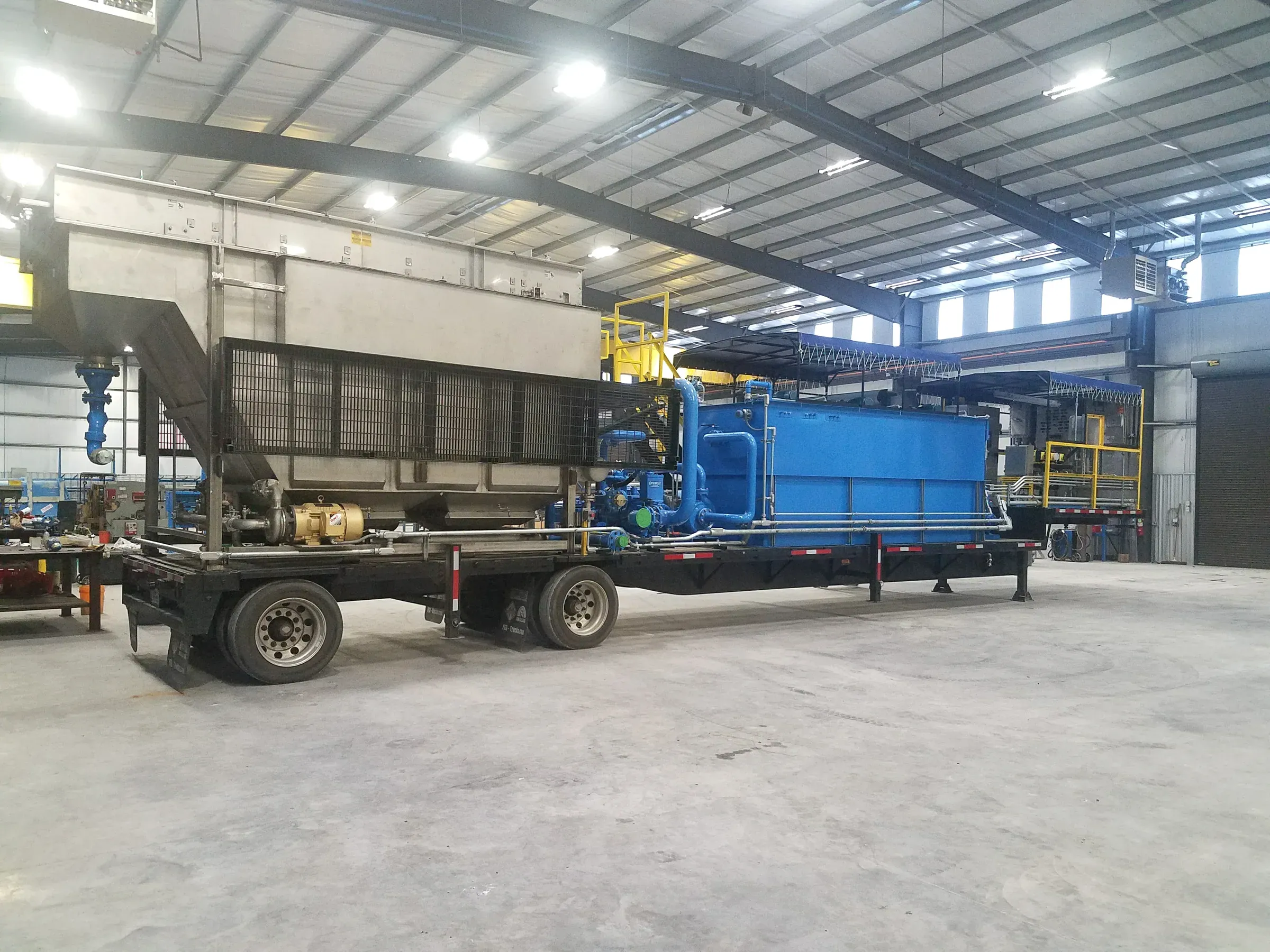
Chemistry in the same building
This is the part competitors cannot easily copy. When a treatability study says the stream needs a different residence time or an extra stage, changing the equipment is an internal conversation rather than a change order with an OEM. Clients building to spec get direct access to the process chemists for bench testing and start-up support.
Inside the laboratoryThree reasons: lead time is Spectrum’s to control rather than a supplier’s, build-to-spec is routine instead of exceptional, and the process chemists who specify the chemistry are in the same building as the welders. When a stream does not behave as expected, changing the equipment is an internal conversation.
DAF units, circular and lamella clarifiers, dewatering boxes and roll-off filters, Turbo Phase Separators, carbon trailers, polymer blending skids, oil–water separators, chemical feed systems, filter boxes and trailer-mounted treatment trains.
It depends on the unit, but pre-engineered sizes ship considerably faster than field-erected equipment, and SolidWorks modeling before cutting is what keeps the schedule honest. Send the duty and you will get a real date rather than an optimistic one.
Yes. Clients building to spec get direct access to Spectrum’s process chemists for bench testing and start-up support — that access is part of the model, not an upsell.
Four buckets, one call
Water, Environmental, Carbon, and Equipment run as one team under one contract — so you brief a single crew and get an answer, not a referral.