Carbon trailers
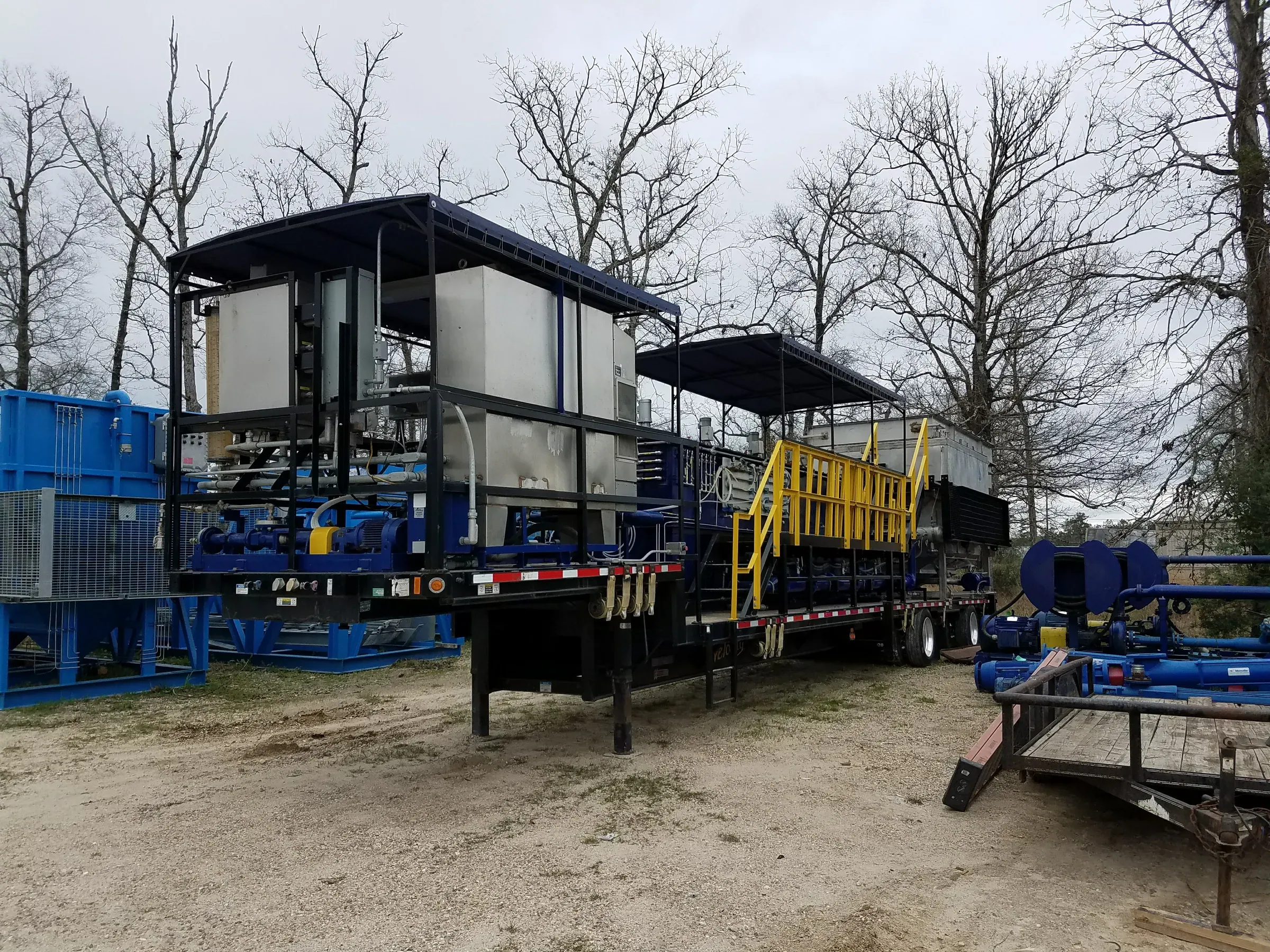
Tandem-axle mobile GAC contactors up to 20,000 lb, with built-in flow-splitting manifolds.
Why it matters
No external piping scope, so set-up time drops to hours.
Carbon Solutions
A properly designed Spectrum activated carbon trailer system — one 20,000-lb trailer — can be engineered to reduce PFAS to below 10 parts per trillion at flows up to 1,200 gpm. Sizing is modelled on your own water, the equipment arrives wet-tested, and the quarterly reporting is written for the rules regulators are actually applying.
Figures as published by Spectrum Water.
The program
Nothing is quoted before the isotherm work is done.
Field sampling and isotherm modeling determine the exact carbon grade, bed depth and vessel configuration for your stream.
ResultBed life forecast to ±5%, eliminating both over- and under-sizing.
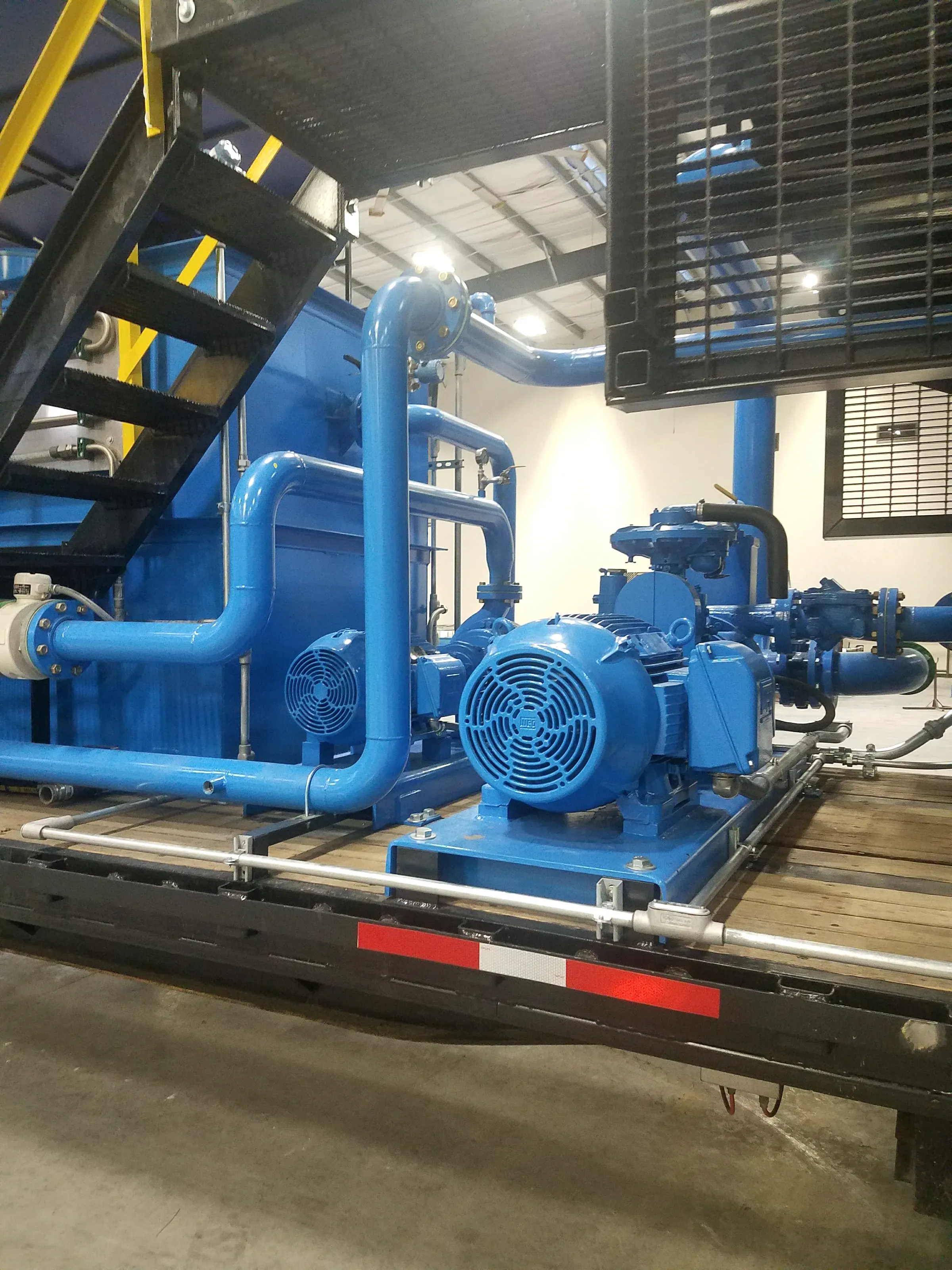
Pre-engineered skids from 50 to 1,000 gpm and mobile trailers engineered for up to 1,200 gpm arrive wet-tested, with flow, pressure and breakthrough sensors already installed.
ResultCompliance achieved in 48 hours or less.
On-site specialists dial in flow, ΔP and effluent quality, with laboratory confirmation of the result.
ResultPFAS held under 10 ppt, with validated performance data.
Vacuum extraction, vessel inspection and media reload completed in a single shift by respirator-trained crews.
ResultMinimal downtime and 40% lower lifecycle media cost.
Quarterly Carbon Application Reports with manifests, TCLP data and performance curves, written for CWA, RCRA and emerging PFAS rules.
ResultAudit-ready paperwork that does not need assembling under pressure.
What it takes
A PFAS system is only as good as its weakest stage — usually the one nobody specified.
Tandem-axle mobile GAC contactors up to 20,000 lb, with built-in flow-splitting manifolds.
Why it matters
No external piping scope, so set-up time drops to hours.
Dual 2,000 lb liquid-phase vessels, pre-engineered for 50–1,000 gpm and shipped wet-tested with media and hoses.
Why it matters
Suits a permanent installation without a capital project timeline.
Specialty media grades selected against your isotherm rather than a generic adsorption table.
Why it matters
Bed life is set by media choice more than by vessel size.
Organophilic clays and solids-handling filtration ahead of the carbon.
Why it matters
Emulsified hydrocarbons and fines blind a carbon bed fast — removing them protects the media you paid for.
A monitoring portal that flags breakthrough before it happens.
Why it matters
Zero permit excursions, rather than finding out when the sample comes back.
Spent media routed to rotary-kiln steam reactivation instead of disposal.
Why it matters
Cuts disposal volume by 90% and replacement cost by roughly 40%.
Verification
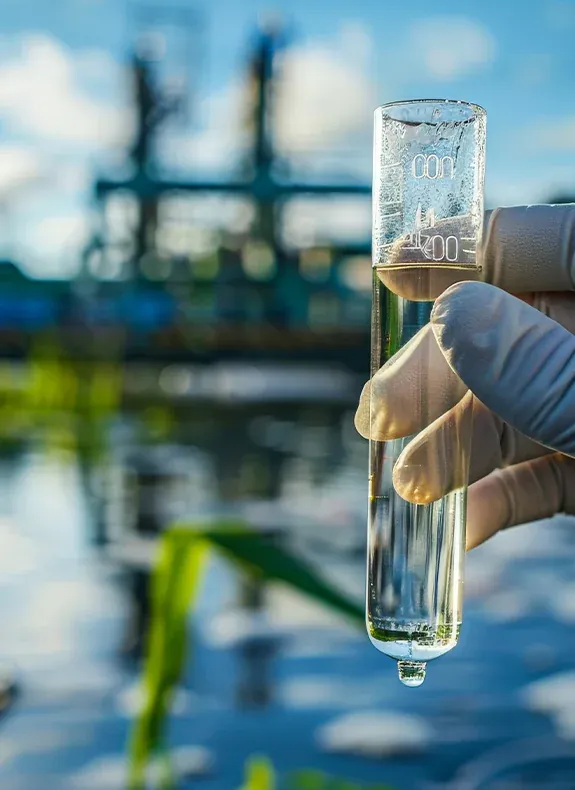
Predictive sizing gets the design right, but the compliance figure comes from the laboratory. On-site specialists tune flow, ΔP and effluent quality at start-up, and lab confirmation establishes the performance you can put in front of a regulator. That distinction matters when the limit is measured in parts per trillion.
Lifecycle
Spent carbon routed for high-temperature steam reactivation returns as recycled media meeting ASTM activity specs, at roughly 40% less than virgin replacement. Disposal volume drops by up to 90%, which for a contaminant with PFAS's regulatory trajectory is a liability reduction as much as a cost one.
How reactivation worksBelow 10 parts per trillion, from a single 20,000 lb carbon trailer engineered for flows up to 1,200 gpm — subject to influent water quality, PFAS concentrations, carbon selection, EBCT and validated treatability testing. The number is confirmed by laboratory analysis after start-up rather than assumed from the design.
Field sampling and isotherm modeling on your own water forecast bed life to within ±5%. That matters in both directions — an undersized bed breaks through early and an oversized one ties up capital in media you are not using.
It is consolidated and manifested through the Lake Charles RCRA 10-day storage site, then routed to rotary-kiln reactivation rather than disposal wherever the media allows. That cuts disposal volume by up to 90% and comes back as usable media instead of a manifest.
Equipment arrives wet-tested with sensors installed, and Spectrum targets compliance within 48 hours of arrival. The constraint is usually site access and the tie-in, not the carbon.
Yes. Twin 5,000 cfm vapor adsorbers handle VOC and H₂S capture, with vapor-phase coverage from 250 cfm to 10,000 cfm, and optional chem-scrubbers for surge control.
Four buckets, one call
Water, Environmental, Carbon, and Equipment run as one team under one contract — so you brief a single crew and get an answer, not a referral.