- 2
- standard grades: DSR A and DSR C
- pH > 3
- influent range for RX A PH
- 40%
- saving versus virgin replacement carbon
The product
Reactivated carbon for non-potable waters
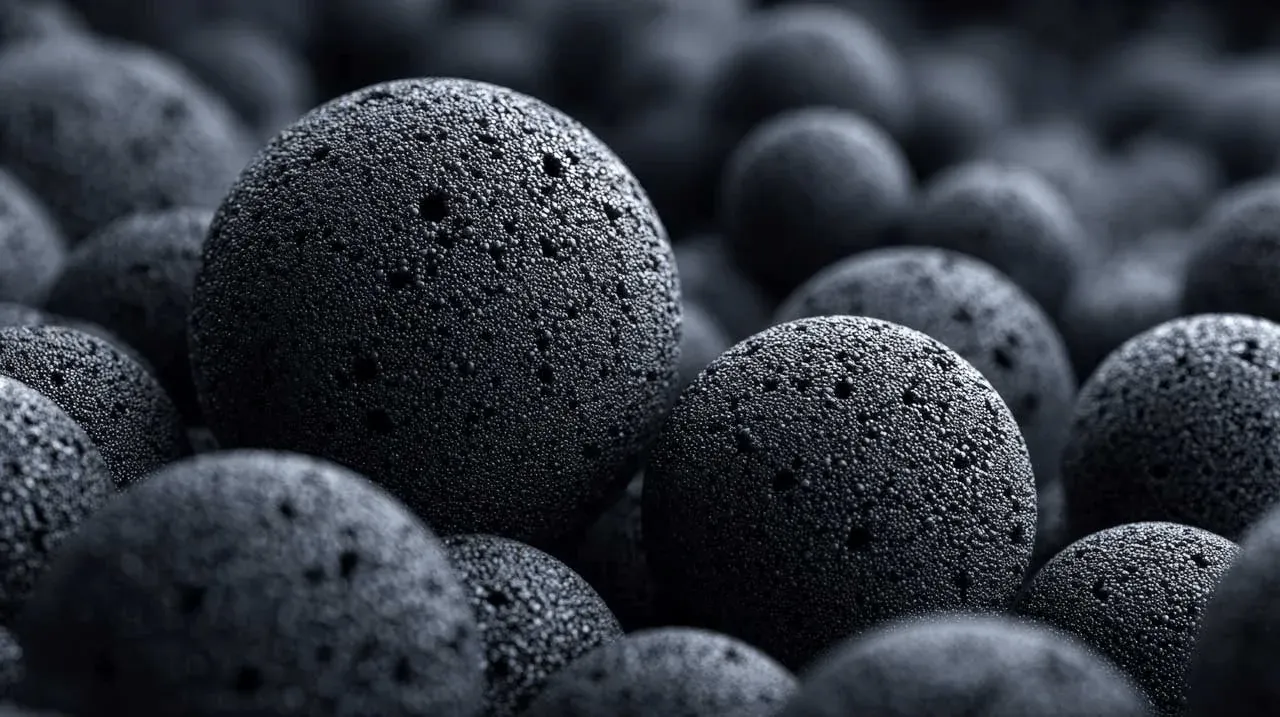
Liquid phase reactivated carbon is available in two grades, DSR A and DSR C, and is designed for the removal of organic contaminants from industrial wastewater, process water, groundwater remediation and other non-potable waters. The carbon is manufactured by the reactivation of previously used granular activated carbon to produce a high density, high surface area and durable product capable of withstanding repeated cycles of use and reactivation.
For situations where the pH of effluent or backwash water is a critical parameter — whether the limitation is due to process or permit restrictions — Spectrum offers RX A PH, a pH-stabilized version of DSR A. RX A PH is specifically designed to alleviate the pH rise commonly found on startup of fresh carbon beds, which may exceed acceptable water quality parameters and cause a significant loss in production. RX A PH is applicable in these situations where the influent pH is greater than 3.
DSR A, DSR C and RX A PH are effective in a wide range of applications providing reliable removal of dissolved organic compounds. They are screened prior to packaging to ensure low pressure drop.
These products are not intended for use in food grade or potable systems.
Applications
Where these grades are used
DSR A, DSR C and RX A PH are effective in a wide range of applications. Some typical applications are listed here.
Applications
- Industrial Wastewater
- Remediation Water Treatment
- Ground water
- Reactivation
- Surface Water
Typical applications
- Point source treatment to remove undesirable chemicals from water sources
- Groundwater remediation applications
- Pump tests
- Dewatering / construction projects
- Biological waste treatment systems, pretreatment or polishing
Features & Applications
What you get from a reactivated grade
Reactivated media is not a downgrade — it is the same carbon, thermally restored to specification and screened before it ships.
- Manufactured from selected sources of previously used activated carbons
- Reactivated / recycled product
- High surface area / pore structure
- Product is screened prior to packaging
- Strongly adsorbing pore structure for a broad range of contaminants and concentrations
- Economical alternative to virgin carbon
- Screened for less fines and lower pressure drop; minimize backwashing
- Propagates the cycle of responsible resource utilization
FAQs
What is the difference between DSR A, DSR C and RX A PH?
DSR A and DSR C are the two standard liquid phase reactivated grades, supplied 8x40 and 8x30 respectively. RX A PH is a pH-stabilized version of DSR A, for situations where the pH of effluent or backwash water is a critical parameter.
Why would I need the pH-stabilized grade?
Fresh carbon beds commonly cause a pH rise on startup, which may exceed acceptable water quality parameters and cause a significant loss in production. RX A PH is specifically designed to alleviate that, and applies where the influent pH is greater than 3.
Can these be used in drinking water systems?
No. These products are not intended for use in food grade or potable systems. They are designed for industrial wastewater, process water, groundwater remediation and other non-potable waters.
How does reactivated carbon compare with virgin on price?
It is an economical alternative — roughly 40% less than virgin replacement media — and it is screened prior to packaging to ensure low pressure drop and less backwashing.
Four buckets, one call
Four service lines. One phone call.
Water, Environmental, Carbon, and Equipment run as one team under one contract — so you brief a single crew and get an answer, not a referral.
- Water
- Environmental
- Carbon
- Equipment