Transfer pumps
Diaphragm and centrifugal transfer pumps sized to the duty, with standby capacity where the flow cannot stop.
Why it matters
A bypass that fails is worse than no bypass — redundancy is specified in, not added later.
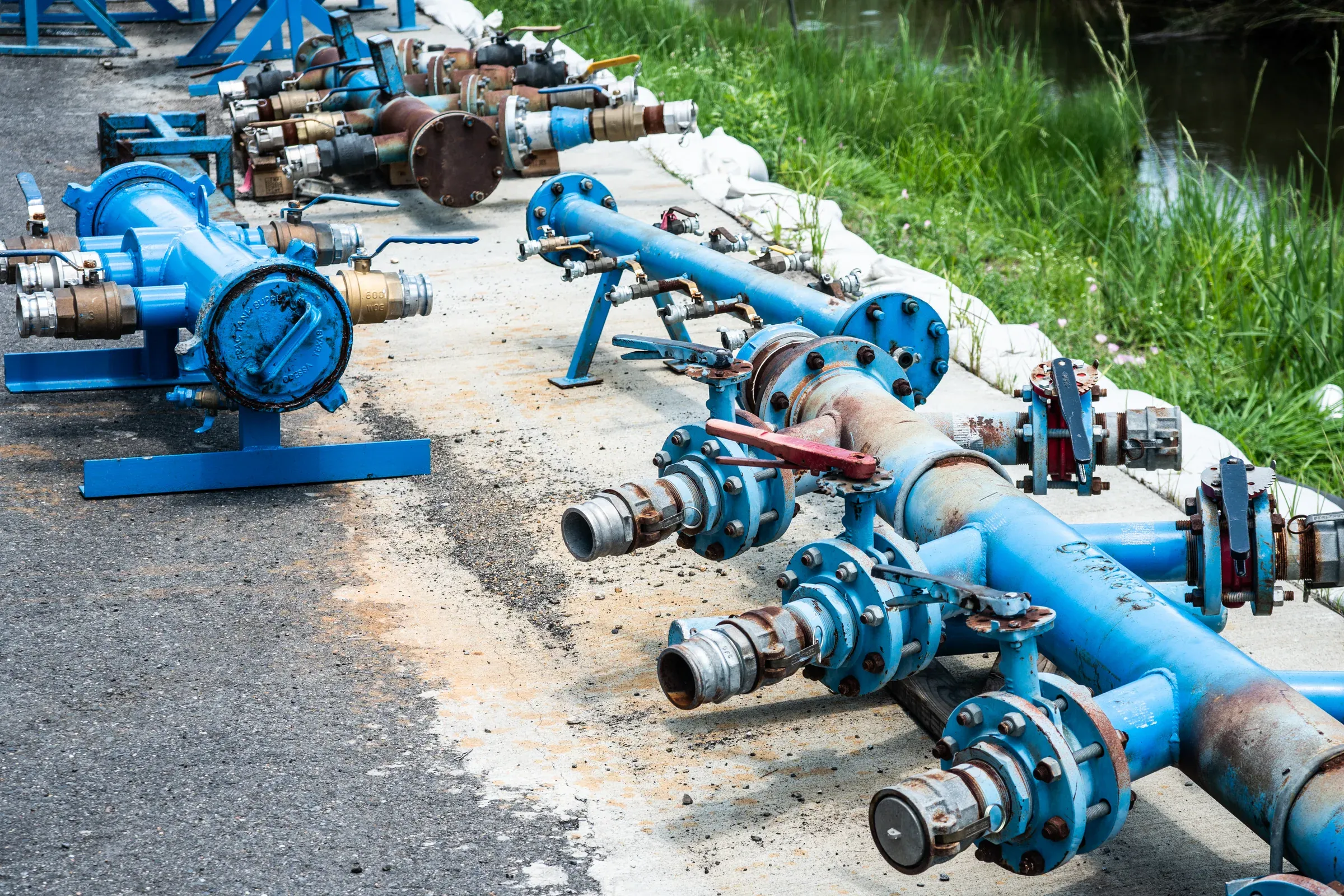
Water Solutions
Industrial hoses, diaphragm transfer pumps, inline mixers, scrubbers and cartridge or bag filters, packaged with any main line equipment for a true one-call solution — so a tie-in, an upgrade or an emergency does not become a production stoppage or a permit excursion.
The package
Pumps, hose, treatment and containment, staged together so the switch-over is a shift rather than a project.
Diaphragm and centrifugal transfer pumps sized to the duty, with standby capacity where the flow cannot stop.
Why it matters
A bypass that fails is worse than no bypass — redundancy is specified in, not added later.
Chemical-resistant hose from 1 to 4 inches, flanged pipe spools, cam-lock fittings and valves.
Why it matters
The connections are the slow part of a bypass; having them staged is what makes the switch quick.
316 stainless static mixers with low pressure loss, for flash neutralization in the bypass line itself.
Why it matters
Lets you treat while you divert, rather than storing the problem for later.
Cartridge, bag and deep-bed media housings in poly, FRP or steel.
Why it matters
Keeps solids out of the temporary equipment you are relying on.
Packed bed and mist eliminator designs for H₂S and acid gases.
Why it matters
Contains what a temporary open system would otherwise release.
Mobile DAF, clarifiers and carbon vessels that treat the diverted stream to permit while the main line is down.
Why it matters
The discharge stays compliant even though the plant that normally makes it compliant is off line.
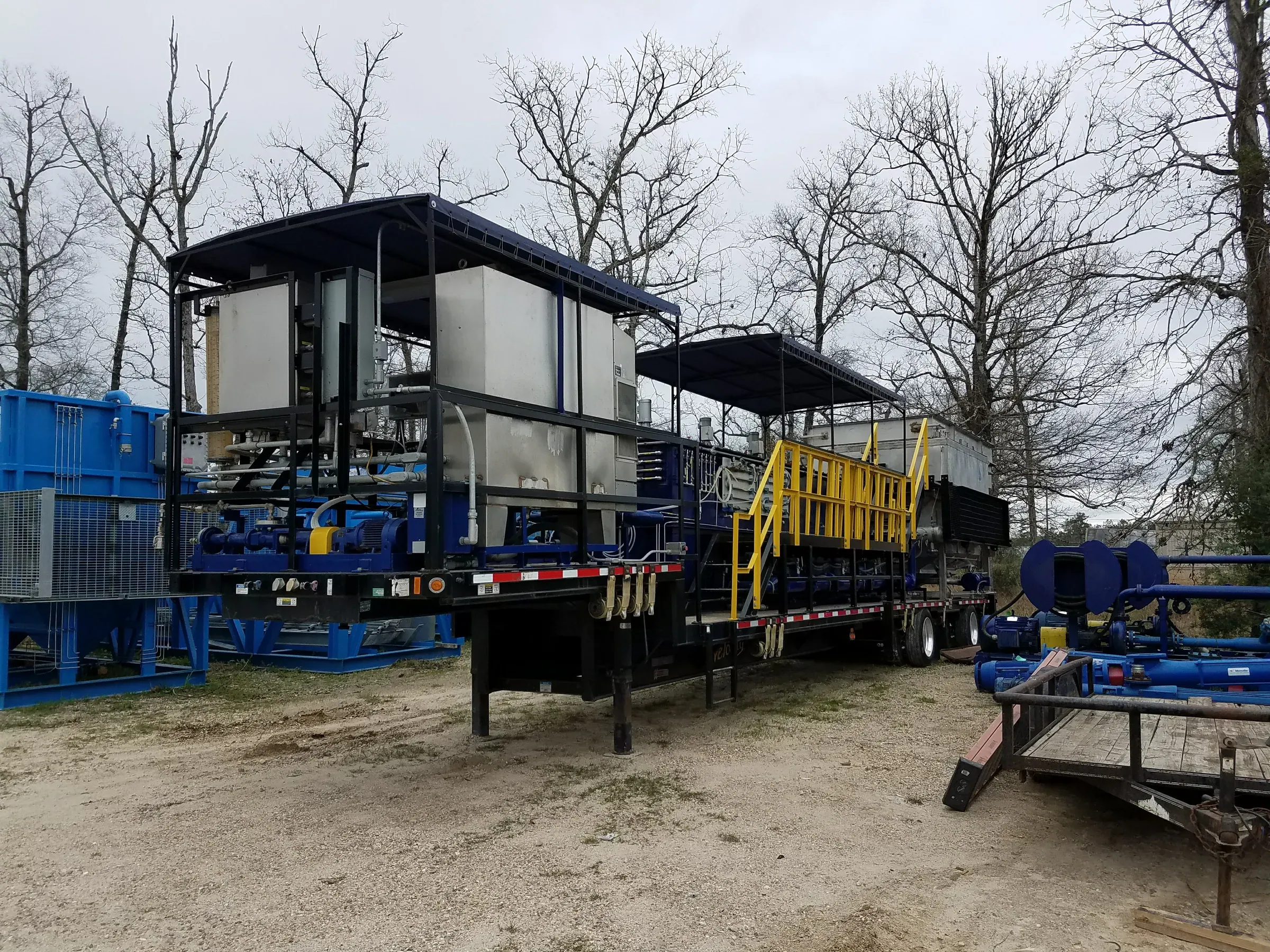
Treat while you divert
The cheap version of a bypass moves water around the work and hopes nobody samples it. That is where excursions come from.
Spectrum packages mobile DAF units, clarifiers and carbon vessels directly into the bypass line, so the diverted stream is treated to the same limits the permanent plant would have held it to. The compliance record stays unbroken through the outage.
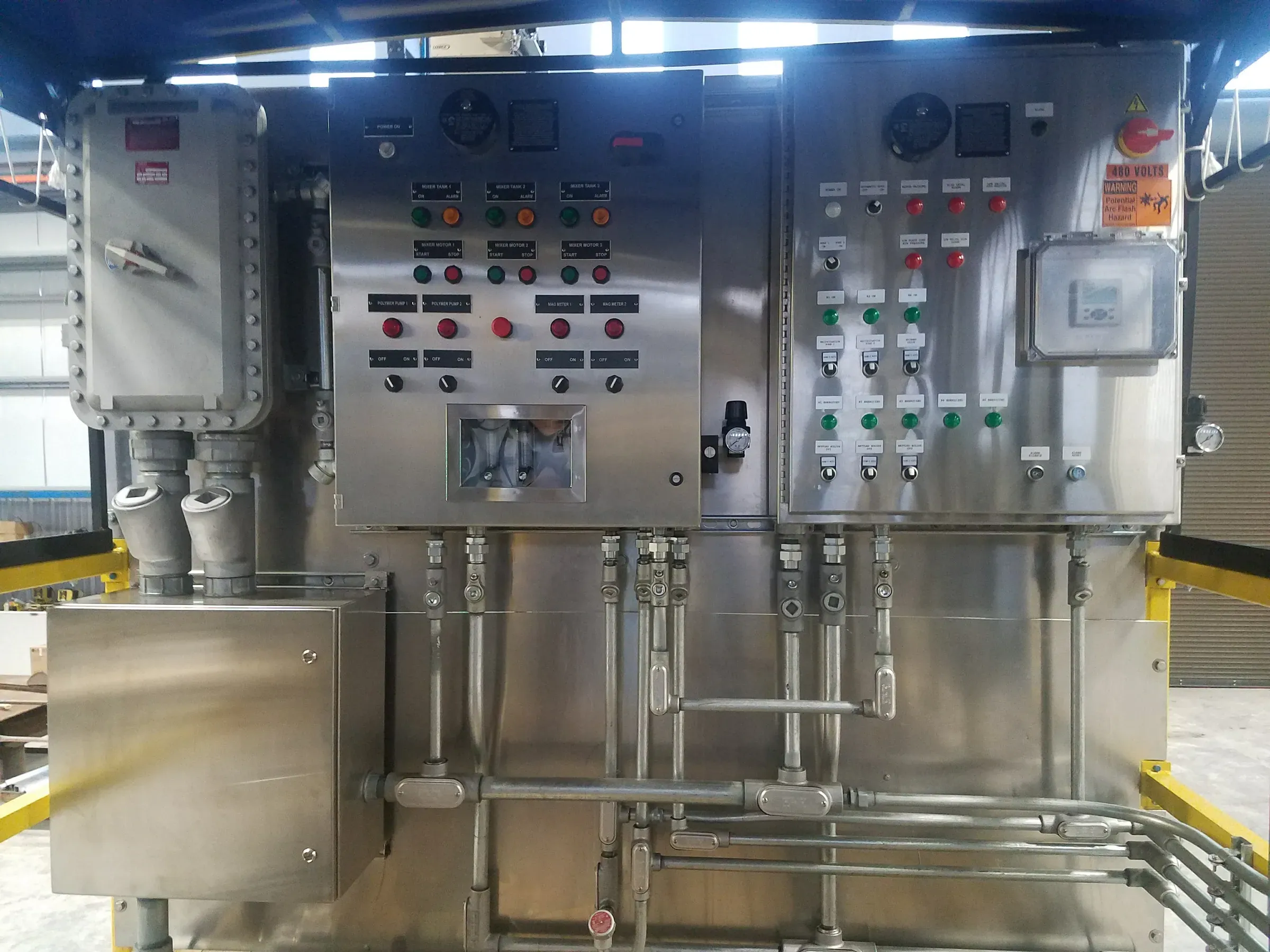
Commissioning
Temporary systems fail at start-up and change-over, not in the middle. Spectrum technicians and process chemists commission the bypass, tune the feed rates and stay until the data says it is right — the same commissioning discipline applied to permanent plants, applied to equipment that is only there for six weeks.
It is the temporary train that keeps a plant running while a permanent system is off line — for a tie-in, an upgrade, a cleanout or an emergency. Flow is diverted around the work, treated to permit if it needs to be, and returned. Done properly, production and compliance both continue as normal.
Yes, and this is what separates a real bypass from a pumped hose. Inline mixers, filtration, scrubbers and mobile DAF or carbon units can be packaged into the bypass line, so the diverted stream meets the same limits the permanent plant would have held it to.
The equipment is not usually the constraint — pre-engineered skids and trailers are held wet-tested and ready. Site access and the tie-in points are. Get us the flow rate, the duty and the connection details and you will get a real timeline rather than an optimistic one.
Yes. Crews mobilize 24/7, and emergency bypass is one of the specific duties the Turbo Phase Separator fleet and the mobile treatment units are held for.
Four buckets, one call
Water, Environmental, Carbon, and Equipment run as one team under one contract — so you brief a single crew and get an answer, not a referral.