Engineered Dewatering
For Sludge, Slurry, And Solids-Laden Streams
More Drainage Area. Shorter Flow Path. Faster Dewatering.
- 33%
- More Drainage Area
- 60%
- Shorter Water Flow Path
- 2X
- dry tons per haul versus typical dewatering
- Zero
- energy in — the box dewaters on gravity alone
Figures as published by Spectrum Water.
What it is
A field-ready dewatering box
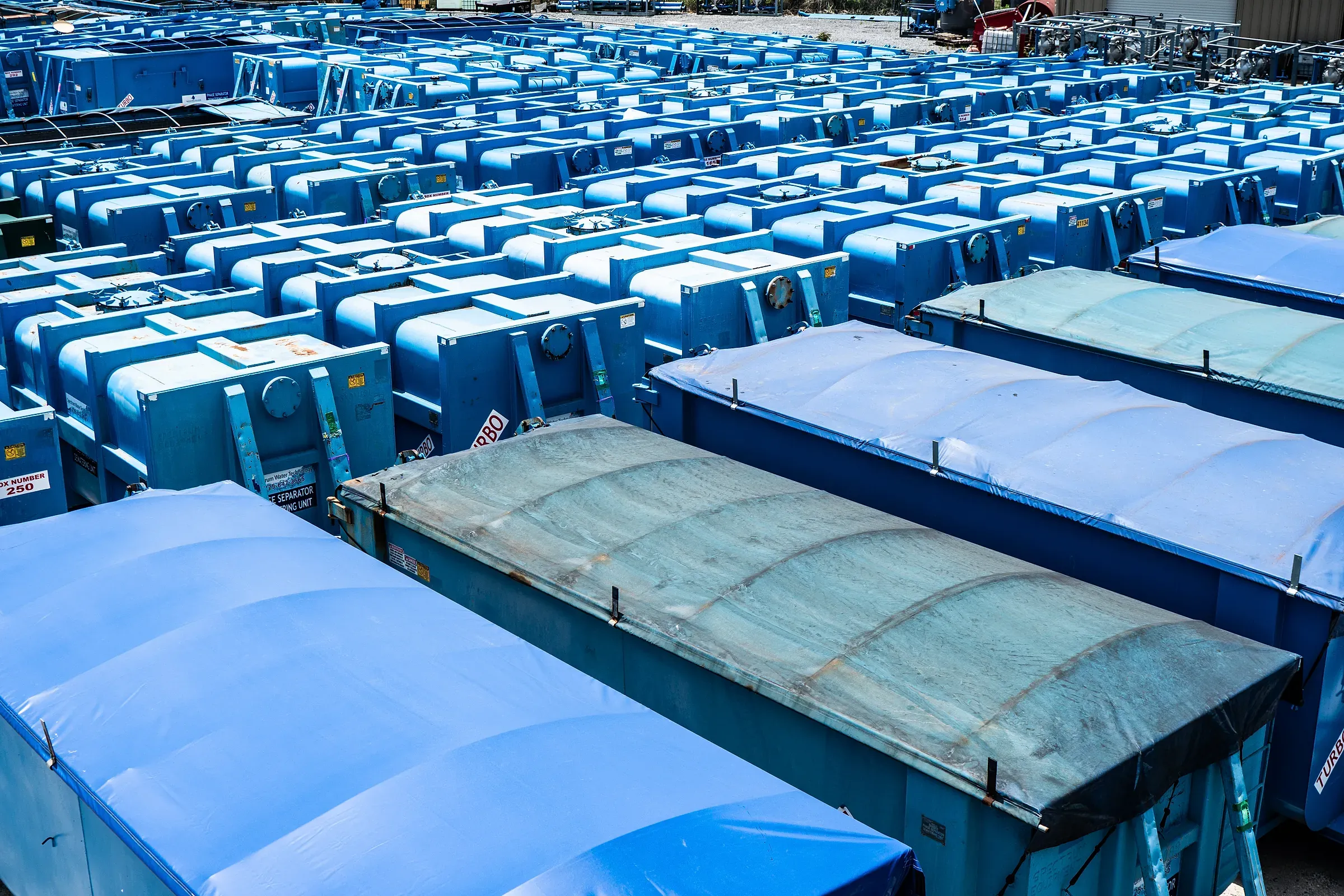
The Turbo Phase Separator is a field-ready dewatering box designed to separate free water from sludge, slurry, and solids-laden material before transport, disposal, or downstream processing. Unlike a standard roll-off container, the Turbo Phase Separator is built around increased internal filter surface area and a shortened water-flow path, helping material drain more efficiently while retaining solids inside the box.
For operators managing sludge pumping, dredging solids, process residuals, tank bottoms, or debris-heavy waste streams, the Turbo Phase Separator provides a practical way to reduce water weight, improve solids handling, and keep dewatering projects moving.
How it works
How The Turbo Phase Separator Works
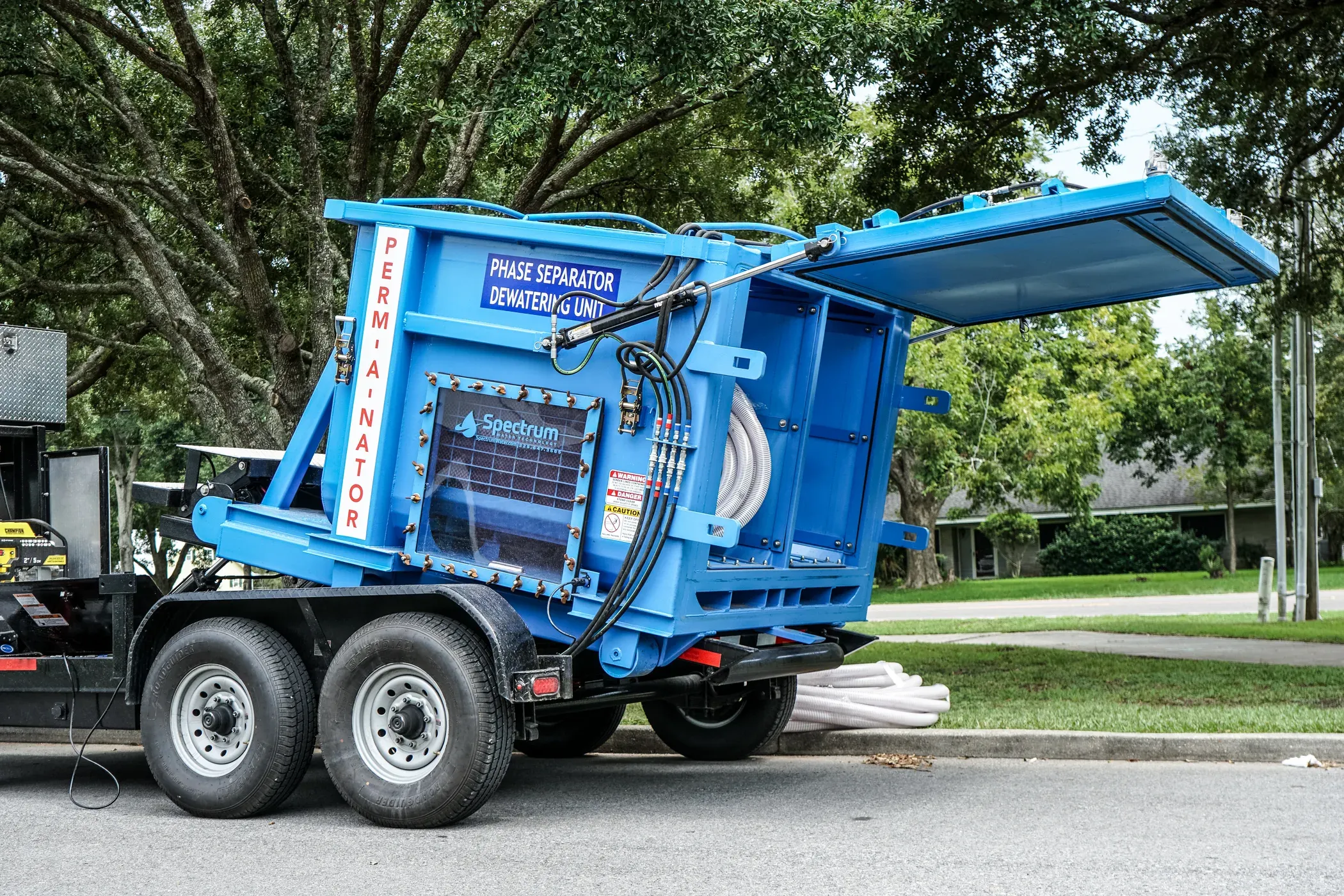
The Turbo Phase Separator uses a gravity-drainage approach inside a roll-off-style dewatering box. Sludge or slurry is loaded into the unit, where liquid is allowed to separate from retained solids through internal filter surfaces. As free water drains, solids consolidate inside the container for more efficient handling and hauling. There is no press, no centrifuge and no motor — gravity does the work, so the unit draws no power and adds nothing to site energy load.
Spectrum Turbo Phase Separator
Engineered to Reduce Dewatering Time and Improve Drainage Performance
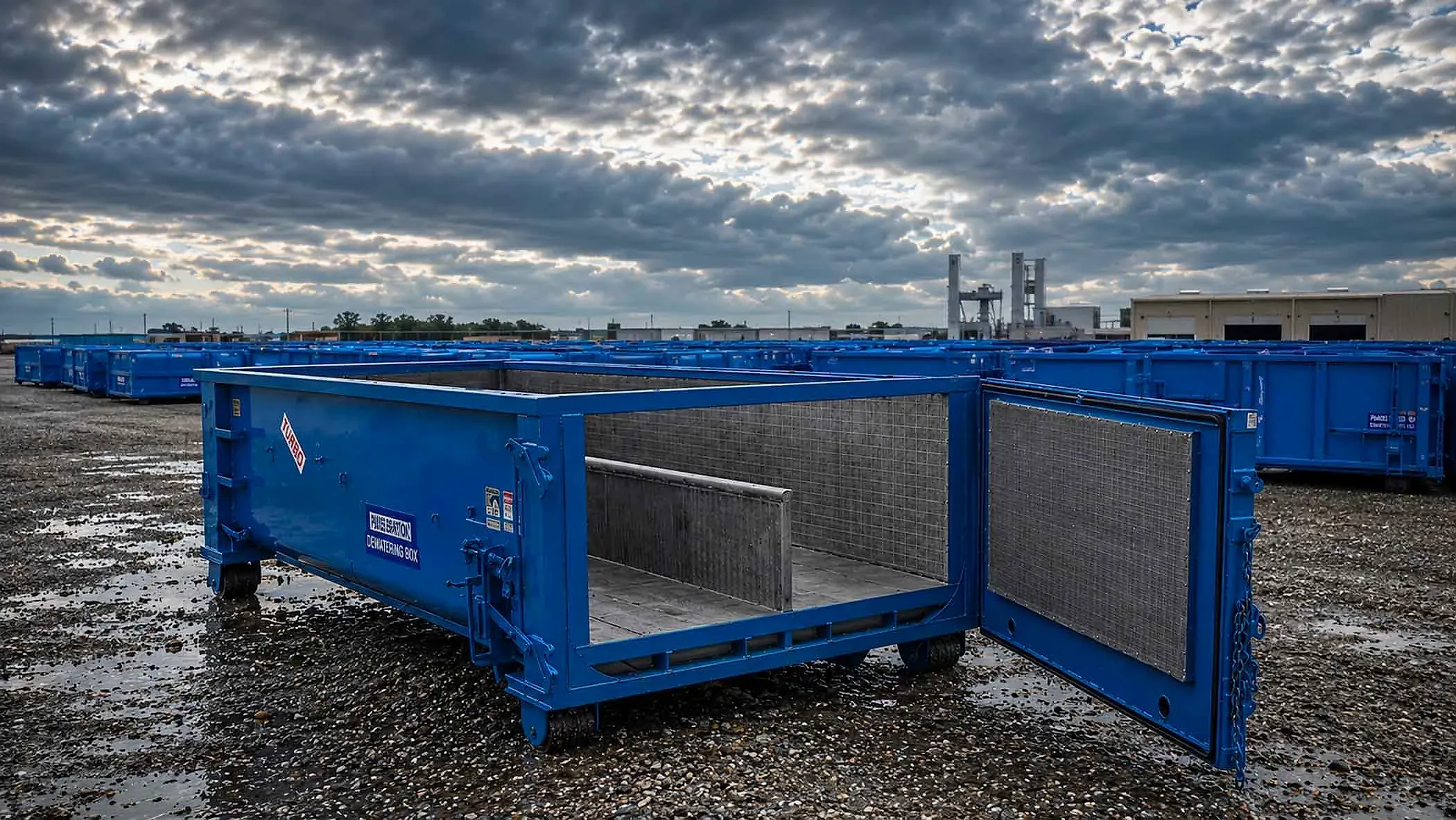
The Spectrum Turbo Phase Separator is a patented roll-off dewatering container with an internal stainless-steel screen designed to increase drainage area and reduce the water flow path.
That engineered design helps move liquid out of the material more efficiently, making the Turbo Phase Separator a strong fit for wastewater, dredging, surge-tank dewatering, pipeline pigging, and difficult solids streams with lumps, chunks, trash, or other hard-to-pump material.
- Increases drainage area compared with standard dewatering box configurations.
- Reduces the water flow path to help shorten dewatering time.
- Supports difficult solids streams that may contain lumps, chunks, trash, or debris.
Sustainability
Gravity does the work, so nothing is spent doing it
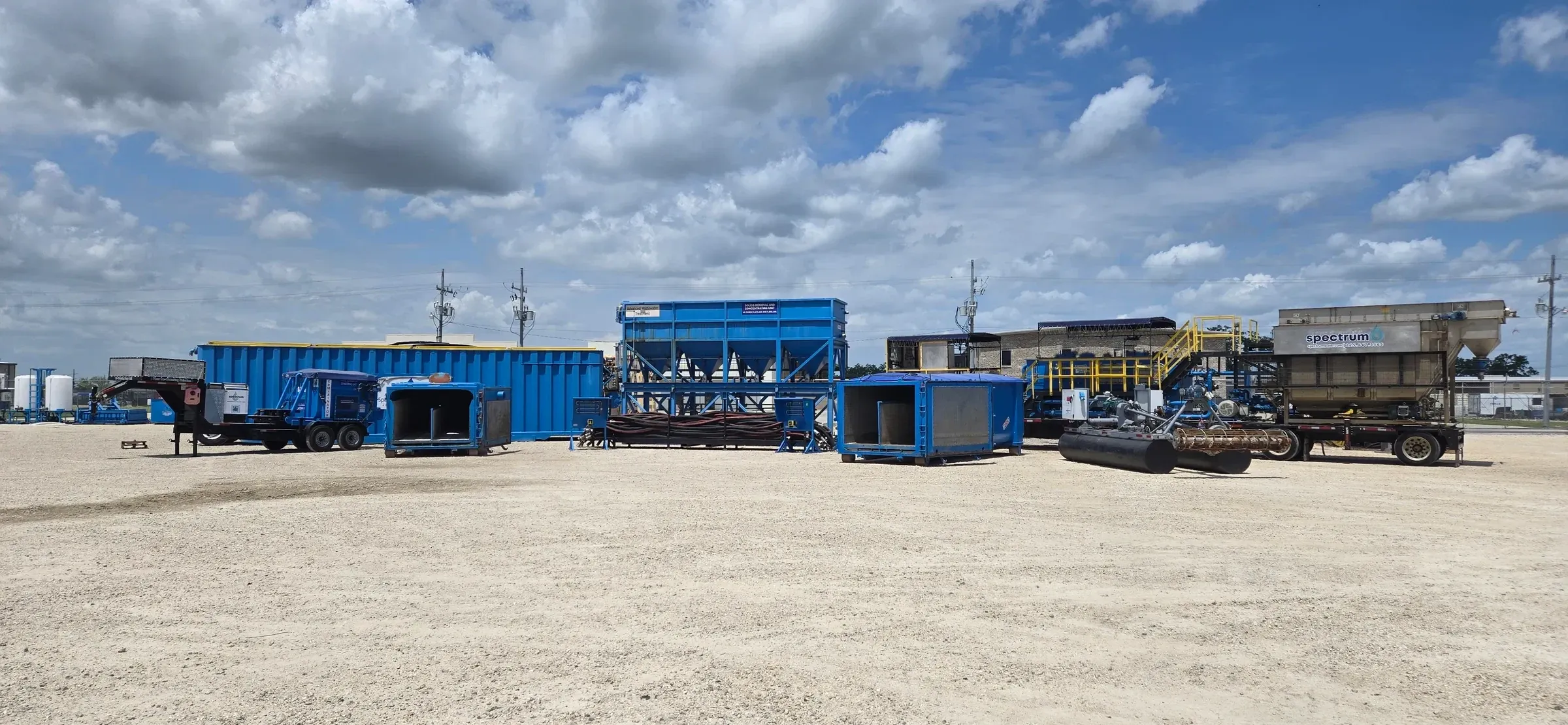
A belt press or a centrifuge takes energy to run, every hour it runs. The Turbo Phase Separator takes none — it is a gravity device, so the same dewatering happens with no motor, no power draw and no carbon attached to the process itself.
The second saving is on the road. Because a load leaves with roughly twice the dry tons of typical dewatering, the same tonnage moves in about half the trips, and water you already treated stops being freight. For plants reporting against an ESG program, that is a reduction you can point at: less energy consumed on site, fewer truck miles to the landfill, and less material landfilled at the end of it.
- No power to the unit — gravity drainage, not mechanical pressing
- Roughly half the truck trips for the same tonnage
- Drier cake, which opens up beneficial reuse instead of landfill
Turbo Phase Advantage
Turbo Phase Separator vs. Standard Dewatering Boxes
Where Turbo Phase Separators outperform standard boxes. A standard box is a practical choice for straightforward gravity dewatering; these are the jobs where it is not.
| Project need | Standard Dewatering Box | Turbo Phase Separator Advantage |
|---|---|---|
| Faster Dewatering | Relies primarily on gravity drainage through available filter area. | Designed with increased internal screen area and a shorter water flow path to reduce dewatering time. |
| Difficult Solids | May struggle when material includes debris, trash, chunks, or solids that are hard to pump. | Built to facilitate handling of materials that cannot be easily pumped because of lumps, chunks, trash, or debris. |
| Odor or Volatile Control | Open configurations may not be ideal when odor or volatile containment matters. | Vacuum-loadable Turbo Phase Separator options can be completely enclosed to help contain volatiles and odors. |
| Hauling Efficiency | Excess water can increase hauling weight and disposal cost. | Improved drainage can reduce sludge-hauling weight and make solids easier to manage. |
| Large-Scale Projects | Useful for many routine applications, but may require more boxes or more time on demanding jobs. | Well suited for wastewater, dredging, surge-tank dewatering, pipeline pigging, and industrial solids streams. |
FAQs
What makes the Turbo Phase Separator different from a standard dewatering box?
An internal stainless-steel screen. It increases drainage area by 33% and decreases the water flow path by 60%, so liquid exits the solids more efficiently. A standard box drains through whatever filter area its walls provide, and the water has much further to travel to get there.
Will it handle material with trash and debris in it?
That is one of the specific reasons it exists. The design is built to facilitate handling of materials that cannot be easily pumped because of lumps, chunks, trash, or debris — the streams where a standard box blinds off and stalls.
Can it be enclosed for odor control?
Yes. Vacuum-loadable Turbo Phase Separator options can be completely enclosed to help contain volatiles and odors, which open box configurations cannot do.
Rent or buy?
Both are available, along with build-to-spec fabrication in Spectrum’s own shop. Custom units add dryer decks, specialty screen cloth and integral polymer injection, and clients building to spec get direct access to the process chemists for bench testing and start-up support.
How much does it actually save on hauling?
Measure it in dry tons per haul. Paired with fast-flow end dump trailers, the Turbo Phase Separator keeps draining in transit, so a load leaves with roughly twice the dry solids of typical dewatering. Since disposal is billed by weight and most of that weight is water, that is where the saving comes from — and it is one less truck on the road for the same tonnage.
Four buckets, one call
Four service lines. One phone call.
Water, Environmental, Carbon, and Equipment run as one team under one contract — so you brief a single crew and get an answer, not a referral.
- Water
- Environmental
- Carbon
- Equipment