Food & beverage
FOG and TSS removal on process and wash-down streams with high organic loading.
Where it fits
Cuts the surcharge that FOG and TSS attract from the receiving authority.
Equipment Solutions
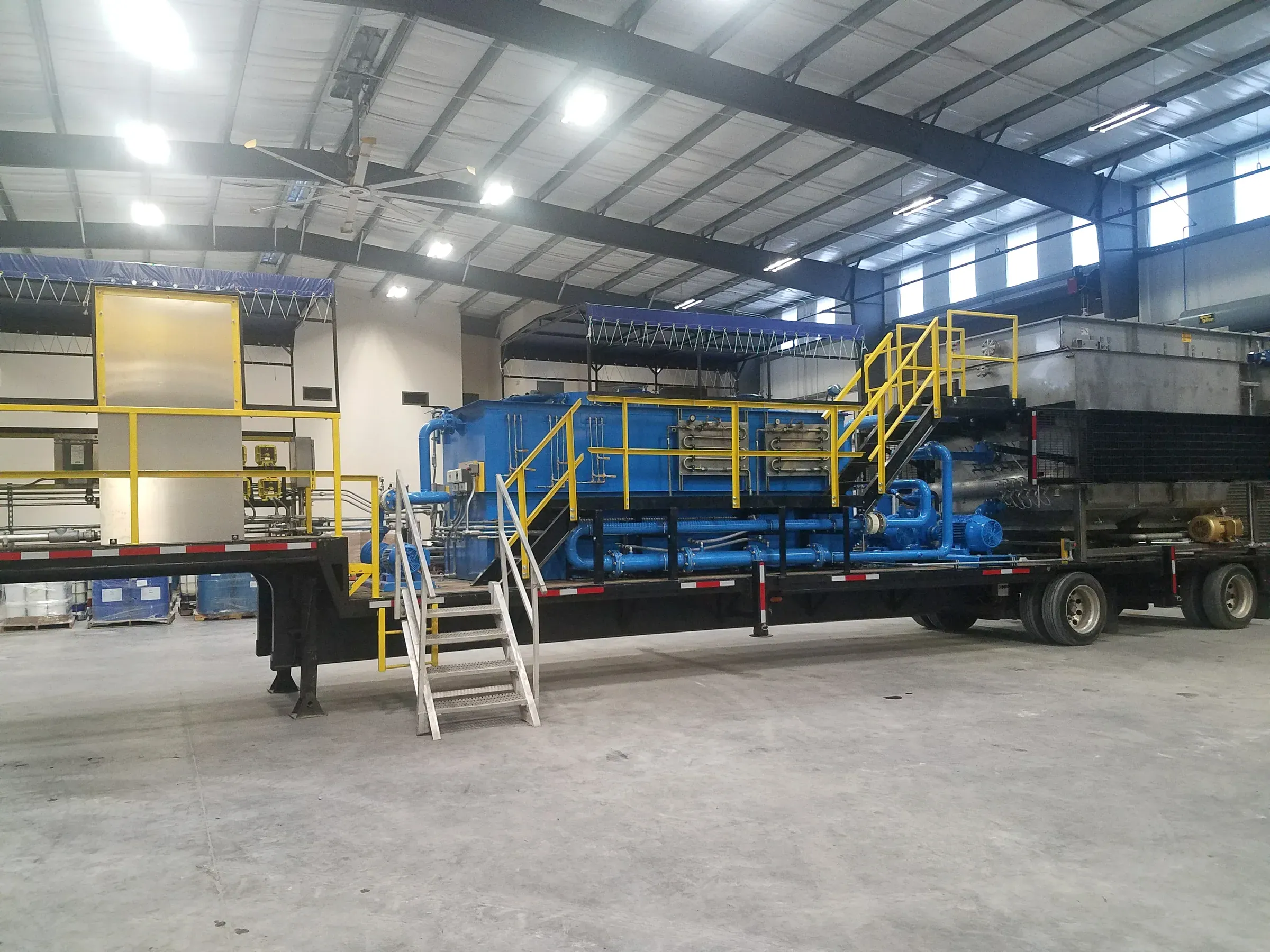
Compact dissolved air flotation for FOG and TSS removal in food, pulp & paper and refinery wastewater — 50 to 1,000 gpm, trailer or skid mounted, and delivered plug-and-play with chemical feed already integrated.
How it works
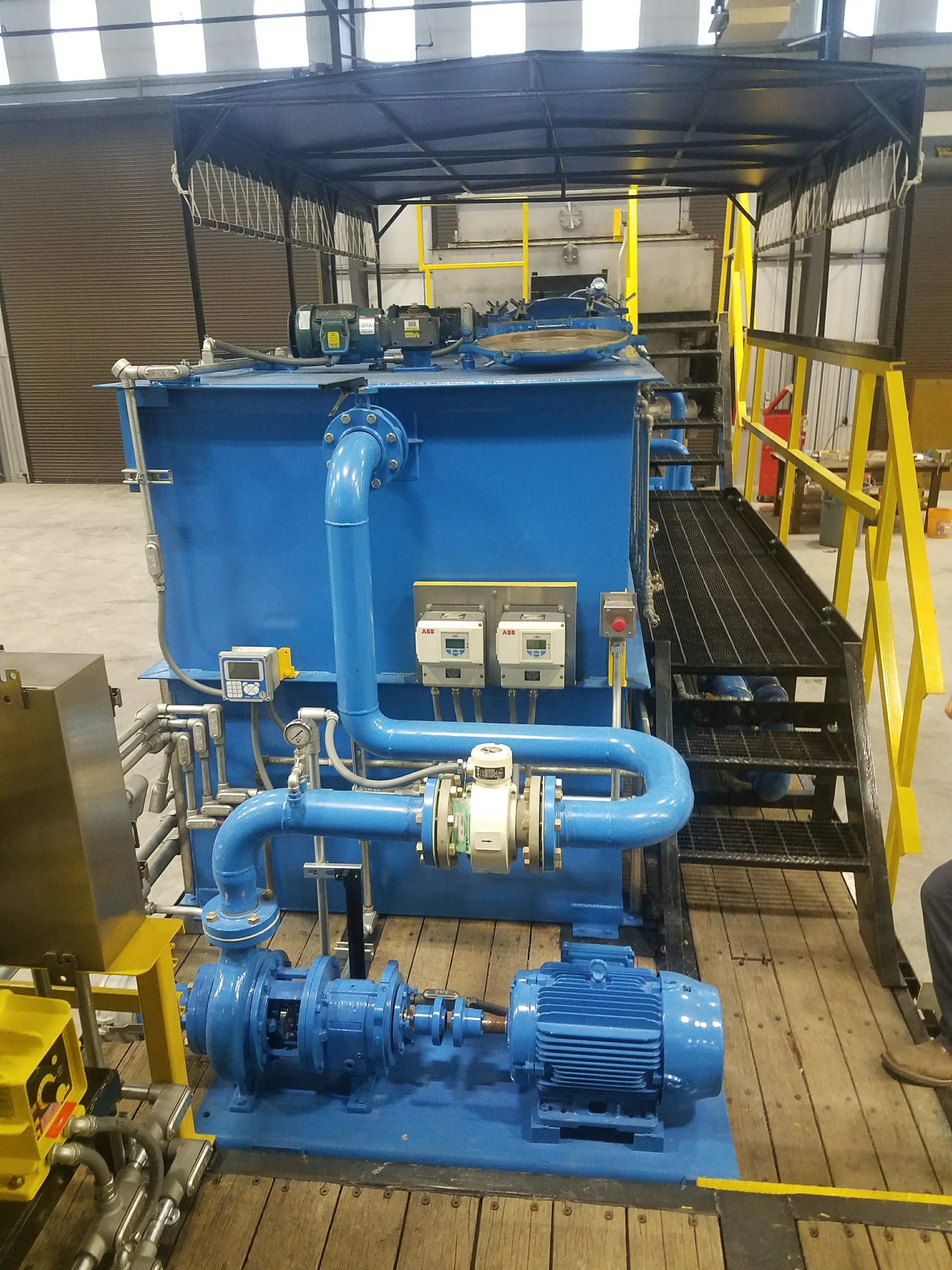
Air is dissolved into a pressurized recycle stream and released into the flotation cell, where it comes out of solution as a cloud of fine bubbles. Those bubbles attach to chemically conditioned solids and carry them to the surface, where a skimmer takes them off.
That makes DAF the right tool for exactly the material a clarifier struggles with — free and emulsified oil, grease, fiber and low-density solids that will not fall out of suspension under gravity.
Applications
Six duties, across process, contingency and upgrade work.
FOG and TSS removal on process and wash-down streams with high organic loading.
Where it fits
Cuts the surcharge that FOG and TSS attract from the receiving authority.
Fibre and filler recovery from white water and effluent streams.
Where it fits
Reduces solids loading downstream and recovers material worth keeping.
Free and emulsified oil removal ahead of biological treatment.
Where it fits
Protects biomass and carbon beds from a load that would smother them.
Mobile DAF packaged into a temporary treatment train while the main line is down.
Where it fits
Keeps the discharge compliant through an outage.
Trailer-mounted units for locations without permanent treatment infrastructure.
Where it fits
Treatment arrives on wheels rather than as a construction project.
Added ahead of an existing plant that is running past its solids capacity.
Where it fits
Buys headroom without rebuilding the plant behind it.
Chemistry
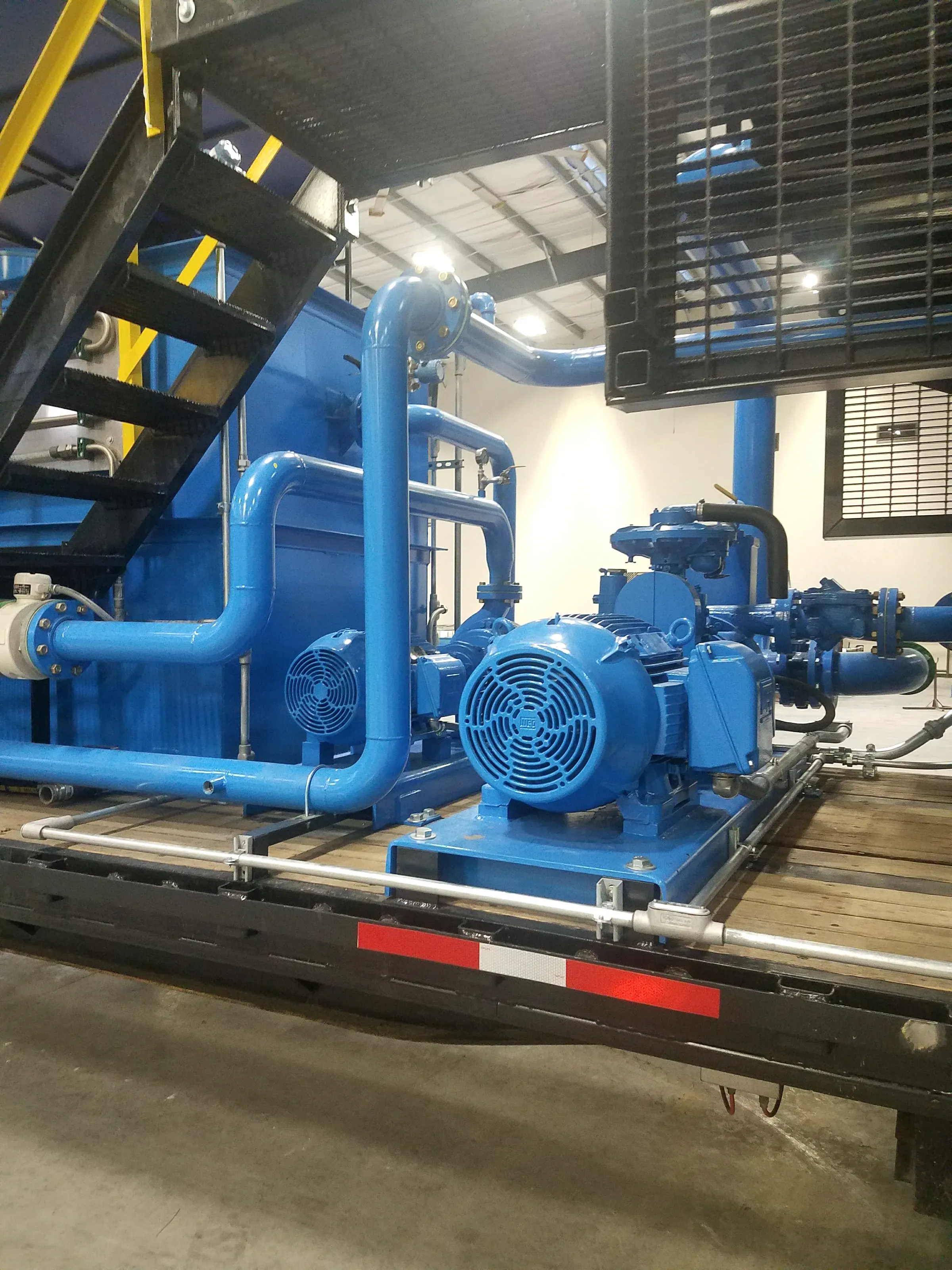
A DAF with the wrong coagulant is an expensive tank. Spectrum jar-tests your sample in the in-house laboratory to select the coagulant, the flocculant and the dose, then supplies the chemistry alongside the unit — and the automated polymer blending skids that deliver it properly hydrated. Hardware and chemistry come from the same people, which is the entire point.
Inside the laboratoryAir is dissolved into a recycle stream under pressure and released into the flotation cell, where it comes out of solution as fine bubbles. Those bubbles attach to chemically conditioned solids and float them to the surface, where a skimmer removes them. It is the right answer for material that will not settle — oil, grease and low-density solids.
Compact DAF units run from 50 to 1,000 gpm, in trailer or skid configuration. Larger duties are handled by paralleling units.
Yes — units are delivered plug-and-play with chemical feed integration for rapid commissioning. That matters, because a DAF is only as good as its coagulant and polymer dosing, and integrating that afterwards is where projects lose weeks.
Jar testing in Spectrum’s in-house laboratory, on your sample. The coagulant, the flocculant and the dose all come out of that work, and Spectrum supplies the chemistry as well as the hardware.
Both, plus build-to-spec. Rental suits contingency and bypass duty; purchase suits a permanent process stream. Pre-engineered units ship considerably faster than field-erected equipment either way.
Four buckets, one call
Water, Environmental, Carbon, and Equipment run as one team under one contract — so you brief a single crew and get an answer, not a referral.